Read in full the statement from PensionsEurope on measures it believes should be taken to mitigate the impact of the Covid-19 pandemic on pension funds across Europe
EU and national action are crucial in this crisis
The Covid-19 pandemic has resulted in an unprecedented turmoil, which reverberates in the global and European financial markets, and will be followed by recession, high numbers of bankruptcies and rapidly rising unemployment.
This crisis is symmetric and poses huge challenges for the EU and the member states. Funded pensions depend on the economy and financial markets and the short-term impact of the crisis is severe. Pension funds are long-term investors with long-term liabilities and with the right policy measures they will be able to get out and recover from this crisis and contribute to financial market stability and the swift recovery of the financial markets and the real economy. It is therefore vital that the EU and member states do their utmost to alleviate the adverse short-term effects of the crisis.
Many EU countries mainly rely on pay as you go (PAYG) social security pensions. Low economic growth and even contraction of the economy will also impact them especially if high unemployment resulting from the crisis turns into lower employment levels. The EU policy to have adequate and sustainable pensions in the future has been based on compensating and complementing lower social security pensions with funded workplace pensions or personal pensions and this will be even more important after the crisis.
Against this background and considering the exogenous nature of the on-going crisis, PensionsEurope and its member associations ask EU level and national regulators and supervisors for close collaboration and support to ensure that pension funds can overcome the challenges posed by the current situation in the financial markets and the severe consequences of the threatening imminent economic downturn. Workplace and personal pensions need to preserve their operational capacities as well as their role to complement public social security pensions and provide adequate and sustainable retirement income.
Measures to alleviate the pressures of funding obligations
The crisis is still in the early days and it is impossible to know how long it will last, which will also differ from country to country. There should therefore be some form of delay on actions that would normally need to be taken (e.g. requirement to produce recovery plan/reduce benefits) until there is a clearer picture of the scale of the crisis and its impact.
The cash flow issues impact on defined benefit (DB) plans as much as on DC plans and possibly more so as in DC plans the contributions required are based on salaries which are being reduced or not paid. The current situation in the financial markets will create new funding pressures and may have impacts on the funding position of pension funds - in particular DB funds, as the value of assets decreases drastically and lower interest rates increase the value of liabilities further. For most DB funds, safety buffers have significantly declined or disappeared, which brings them closer to a possible trigger of recovery plans if the financial markets do not recover in the forthcoming months. It is also vital that pension funds are able to maintain investments that have potential for higher returns, while having the freedom to rebalance their portfolios prudently, taking into account market conditions. Pension funds tend to have a counter-cyclical investment behaviour rather than a pro-cyclical one, therefore contributing to more stable prices in the market during substantial volatility.
EU and national policies should not foster pro-cyclical behavior by IORPs and other pension funds through regulatory requirements as it could destabilize the financial markets, worsen the situation of the real economy. This would very likely force the funds to sell at a loss, which would not be in the interest of the beneficiaries or the sponsors. Depending on the system, this could lead to claims on the sponsoring companies to make additional contributions. The declined liquidity of the sponsor might become a problem.
PensionsEurope welcomes the adoption of specific measures that would provide a certain relief from the pressures arising from funding obligations when they are generated or exacerbated by crisis. The following measures should be considered by National Competent Authorities (NCAs)
• Measures that would ensure that recovery periods are extended in order to allow pension funds to recover their funding position.
• Measures that would provide additional flexibility to pension funds between the moment of observation of the underfunding position and the trigger of recovery actions.
• Measures that would relax the minimum funding or solvency requirements for a certain and limited period of time.
DC schemes do not present solvency concerns even if returns have declined as a result of the shock in the financial markets. Notwithstanding this, the impacts on returns and pension benefits may lead to an increase of withdrawals from voluntary pension plans in those countries where national legislation allows this under specific conditions. DC schemes therefore have to deal with member communications and decumulation options, next to their investments. Many businesses are facing worsening cash flow conditions, which raises specific concerns for pension schemes.
Measures to provide operational relief
Under the current challenging conditions, pension funds need to deal with the effects of the crisis and concentrate their efforts on ensuring business continuity while protecting the health of their own personnel. Business continuity does not necessarily mean business as normal. There may be reduced availability of staff and many may also be carrying out schooling or caring duties at home. There may also be a higher level of enquiries from beneficiaries worried about their pension savings.
PensionsEurope recommends EU authorities and NCAs provide operational relief and postpone non-critical work, where appropriate, in order to alleviate the administrative burden on pension funds during the current crisis.
Flexibility must be provided by NCAs to pension funds as regard the reporting of 2019 year-end and quarterly 2020 data. PensionsEurope recommends EIOPA and the ECB to promote the adoption of such measures by NCAs as EIOPA has done in relation to insurers.
In several member states, NCAs already adopted specific measures to postpone some supervisory reporting requirements.
• In the Netherlands, the Dutch National Bank indicated it will temporarily relax the supervisory burden on pension funds and already announced that an additional 3 months for reporting of all annual statements will be provided to IORPs.
• In Germany, flexibility is provided for some reporting requirements: the deadline for the submission of the security asset registers (initially March 31st) was suspended. The legally required submission in paper form must be made by June 30th.
• In Bulgaria, the deadline for FSC reporting has been postponed. Some discussions are also underway to explore the possibility to delay some administrative obligations and tax payments.
• Flexibility should also be considered in the organisation of the administrative meetings of pension funds.
We also ask that EU institutions reconsider the deadlines for on-going consultations. The European Commission has already extended the deadlines to respond to relevant on-going consultations. Indeed, the deadline for the consultation on the NFRD review has been postponed to 11 June and the deadline for the consultation on the MiFID II review to 18 May 2020. PensionsEurope welcomes this initiative and recommends a further postponement of these deadlines in case the crisis does not pass. We also urge the EU institutions and NCAs to reconsider the implementation timelines of recently adopted EU legislation, such as the relatively short period for the Disclosure Regulation, either through a delay of the deadline or an accommodating supervisory approach.
PensionsEurope welcomes the extension of deadline agreed by IOSCO and the BCBS for completing the final two implementation phases of the margin requirements for non-centrally cleared derivatives, by one year. This extension will provide additional operational capacity for firms to respond to the immediate impact of Covid-19 and at the same time, facilitate covered entities to act diligently to comply with the requirements by the revised deadline.
Measures to support sponsoring companies
Sponsoring companies are under stress as they face a severe shock both on the demand and the supply sides and lack liquidity, which might affect their capacities to fulfil their payment obligations including pension contributions.
PensionsEurope welcomes the adoption of measures that would provide flexibility on the payment of contributions as well as recovery contributions. In some member states, NCAs already adopted specific measures to alleviate the pressures on sponsoring employers.
• In the Netherlands, the government has decided to provide employers with a compensation, which partly covers the payment of salaries and pension contributions and pension funds will delay the collection of premiums within legally set limits. Similar measures have been adopted in Bulgaria.
• In Germany, it has been decided to postpone to 2021 the payment of recovery contributions by sponsoring employers to Pensionsfonds (one form of IORPs) which are due when the shortfall exceeds 10 per cent.
• In Switzerland, the government has introduced a new ordinance temporarily allowing companies to use an employer contribution reserve for employee contributions as well as employer.
Furthermore, PensionsEurope recognizes the efforts of European authorities to find tools to offset the economic fallout of the pandemic and support companies that are in distress, and welcomes the wide range of fiscal and economic measures that have been adopted at the European level. Since the beginning of the crisis, new measures have been designed to support companies and provide them with additional liquidity with the purpose to save them from bankruptcy. This is vital from a wider economic perspective as well as for the specific case of pension funds considering that sponsoring companies are granted additional support.
PensionsEurope also supports the ambitious fiscal packages and initiatives, which most European member states have adopted and welcomes the positive stabilising impacts these measures will have on sponsoring companies. These measures include the postponement of social security and tax payments, different kinds of guarantees for new bank loans and additional subsidies, introduction of moratoria of debt repayment due to banks, direct grants to small businesses and public loan guarantees and/or compensation of part of the labour costs for companies (including pension contributions) expecting a certain reduction in their revenues.



Latest News
-
Swedish court continuing to review Indecap’s dispute with FTN
-
PFA welcomes SpaceX IPO as Danish pension funds split on company
-
UK's Smart Pension surpasses £10bn AUM
-
Swedish occupational pension assets increase by SEK13bn in Q1
-
UK DB funding surplus rises by £5.3bn in May
-
Pensions sector among least affected by major ICT incidents in 2025 – ESAs




Podcast: Stepping up to the challenge
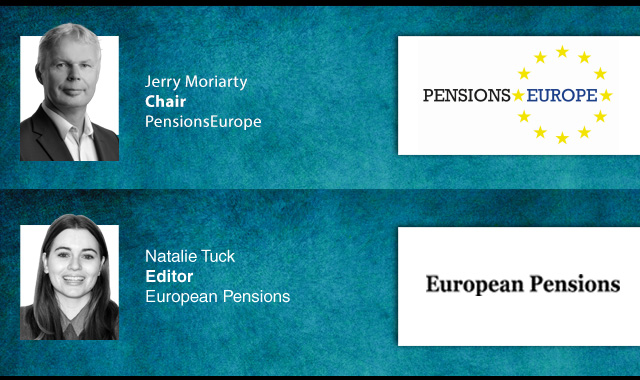
In the latest European Pensions podcast, Natalie Tuck talks to PensionsEurope chair, Jerry Moriarty, about his new role and the European pension policy agenda
Podcast: The benefits of private equity in pension fund portfolios

The outbreak of the Covid-19 pandemic, in which stock markets have seen increased volatility, combined with global low interest rates has led to alternative asset classes rising in popularity. Private equity is one of the top runners in this category, and for good reason.
In this podcast, Munich Private Equity Partners Managing Director, Christopher Bär, chats to European Pensions Editor, Natalie Tuck, about the benefits private equity investments can bring to pension fund portfolios and the best approach to take.
In this podcast, Munich Private Equity Partners Managing Director, Christopher Bär, chats to European Pensions Editor, Natalie Tuck, about the benefits private equity investments can bring to pension fund portfolios and the best approach to take.
Mitigating risk
BNP Paribas Asset Management’s head of pension solutions, Julien Halfon, discusses equity hedging with Laura Blows

© 2019 Perspective Publishing Privacy & Cookies
Recent Stories