There is still a strong investment case for commodities as positive drivers currently outweigh the risks and this trend will continue into 2011, according to ING Investment Management. The asset manager said assets under management into the asset class reached over €240 billion in 2010.
Koen Straetmans senior strategist at ING IM explained: “Commodities have been performing well and the continued global economic growth has supported this - we expect this strong momentum to prevail through the first half of 2011.
“In Europe the UK stood out with an uptick in manufacturing PMI and in the core countries of the Eurozone a similar improvement was seen as well as some underperformance in the peripheral countries. Germany has been performing well with increases of factory orders by 5.2% in November for an annual growth rate of 20.6%.
“In the US we have seen fiscal policy measures, tax cuts and unemployment benefit extensions which has added to the good mood. In China the PMI manufacturing data for the tail end of 2010 confirmed the cyclical rebound that is developing, and on the policy front the five year plan is likely to focus on construction, national grid development, transportation and metal production. Most notably, the economic growth in India has remained at a solid 8.9% annual pace in the third quarter of 2010."
These drivers combined with low rates and secular structural trends in emerging markets (such as urbanisation, changing lifestyle and dietary habits) point towards a sustained commodity demand and investment during the course of 2011.
According to ING IM precious metals and gold in particular accounted for the bulk of investment demand. More recently, this has been joined by inflows in the more cyclical segments whilst agricultural commodities have seen the biggest outflows until recently. Devastating floods in Australia and drought in Argentina has seen falling supplies feeding a bullish mood in crop prices. Short term weather-related patterns have joined structural demand trends for agricultural products.
Straetmans warned: “Although positive drivers currently outweigh the risks, it’s important to be mindful of those that are posing a threat including over-tightening in China, solvency stress contagion in the Eurozone and upcoming regulation i.e. Dodd-Frank in the US. Protectionism, currency wars, and administrative price controls may add to the list of risks but are more likely to disrupt trade flows more than anything else.”
For commodities in general and precious metals, in particular gold, low rates are an important driver of demand. Not only do low rates reduce the opportunity cost of holding commodities, they equally reduce financing costs of commodity storage. Low rates also help support economic recovery in the developed world. Moreover they are likely to lead to additional capital flows towards emerging markets where the higher returns can still be found. Both physical demand as well as investment demand for commodities benefit from a low yield environment.
In conclusion, ING said the positive drivers for commodity investing have been a collection of factors across the world including QE(2) in the developed world putting a cap on yields, potential underestimation of determination of policymakers in Europe, tax cuts and unemployment benefit extensions in the US, pre-holiday sales restocking in the developed world, a cyclical rebound in China, new Chinese five-year targets (public housing, national grid, transportation and metal production), solid Indian growth, climate change, secular trends in emerging markets (urbanisation and changing lifestyle and dietary habits) as well as increasing supply constraints.



Latest News
-
Finnish pension reforms to come into force from 1 July
-
Icelandic pension funds Gildi and Festa begin merger talks
-
Germany's DAI calls for wider use of equities in German pensions
-
Finnish earnings-related pension providers' solvency ratio falls to 129.5%
-
The Netherlands’ Hoogovens Pension Fund returns 2.7% in 2025
-
Dutch pension fund Haskoning selects Van Lanschot Kempen as fiduciary manager




Podcast: Stepping up to the challenge
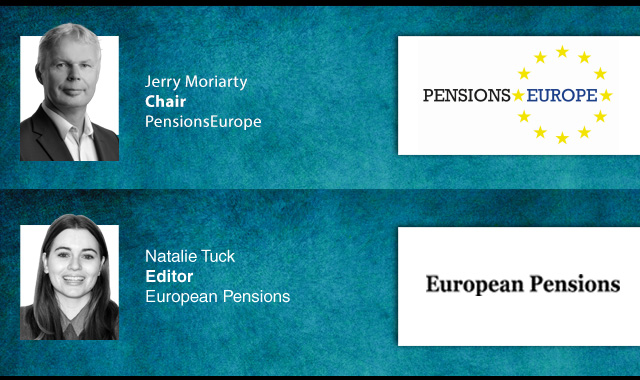
In the latest European Pensions podcast, Natalie Tuck talks to PensionsEurope chair, Jerry Moriarty, about his new role and the European pension policy agenda
Podcast: The benefits of private equity in pension fund portfolios

The outbreak of the Covid-19 pandemic, in which stock markets have seen increased volatility, combined with global low interest rates has led to alternative asset classes rising in popularity. Private equity is one of the top runners in this category, and for good reason.
In this podcast, Munich Private Equity Partners Managing Director, Christopher Bär, chats to European Pensions Editor, Natalie Tuck, about the benefits private equity investments can bring to pension fund portfolios and the best approach to take.
In this podcast, Munich Private Equity Partners Managing Director, Christopher Bär, chats to European Pensions Editor, Natalie Tuck, about the benefits private equity investments can bring to pension fund portfolios and the best approach to take.
Mitigating risk
BNP Paribas Asset Management’s head of pension solutions, Julien Halfon, discusses equity hedging with Laura Blows

© 2019 Perspective Publishing Privacy & Cookies
Recent Stories