European governments are moving in the direction of political compromise toward achieving a consensus on the design of a financial transaction tax, according to EU Commissioner Algirdas Šemeta.
In a speech to a meeting at the Danish parliament Šemeta said that EU finance ministers had recently expressed ‘general support’ for the objectives of the FTT proposal, agreeing technical work on the controversial tax should continue.
The commissioner for taxation, customs union, anti-fraud, audit and statistics outlined a number of areas in which opinions “diverged” among member states.
An important point of divergence was the scope of transactions and institutions to fall under the tax. Šemeta said an EU-wide tax would allow for a large scope and include derivatives. Conversely, a tax with a “very limited” scope would not be fiscally neutral in penalising some products or actors and privileging others.
Variations in the economic of the tax on different states had also been subject to debate.
“Our proposal is not designed to target specific member states and its regional incidence is more evenly distributed than many seem to think. Seen on an annual basis, its impact on growth and jobs is negligible. And that is without even taking into account the possible benefits that smart spending of the revenues could generate.”
The structure of rates and taxation of derivatives was another bone of contention, the commissioner said. The commission was proposing to use the notional value as a tax base for all derivative products, taxing at a rate of one basis point of this value.
Šemeta said the concerns around the proposal had been heard and gave assurances that contributions to the debate would be “carefully assessed and taken due care of” as negotiations continue.
Strong measures to mitigate relocation risks and tax avoidance effects were being built in to the policy, Šemeta said.
“And we have worked to limit the incidence of the tax outside the financial sector, so as not to overburden citizens, non-financial companies or occupational pension funds.”
Looking ahead, the commissioner said the active engagement of the member states enjoyed to date must be maintained, and reiterated his view that an FTT applied across the entire EU was the best way of ensuring all citizens can benefit from the tax.
“One thing is absolutely clear: member states must reach a decision on the FTT, and we must do so quickly. This is what citizens expect. It is what markets are looking for. And it is what many member states have called for.”



Latest News
-
Swedish court continuing to review Indecap’s dispute with FTN
-
PFA welcomes SpaceX IPO as Danish pension funds split on company
-
UK's Smart Pension surpasses £10bn AUM
-
Swedish occupational pension assets increase by SEK13bn in Q1
-
UK DB funding surplus rises by £5.3bn in May
-
Pensions sector among least affected by major ICT incidents in 2025 – ESAs




Podcast: Stepping up to the challenge
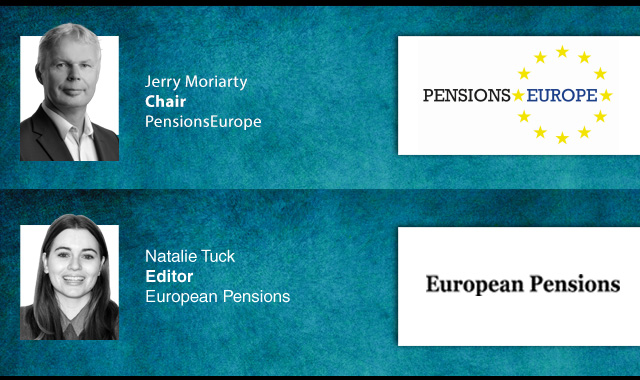
In the latest European Pensions podcast, Natalie Tuck talks to PensionsEurope chair, Jerry Moriarty, about his new role and the European pension policy agenda
Podcast: The benefits of private equity in pension fund portfolios

The outbreak of the Covid-19 pandemic, in which stock markets have seen increased volatility, combined with global low interest rates has led to alternative asset classes rising in popularity. Private equity is one of the top runners in this category, and for good reason.
In this podcast, Munich Private Equity Partners Managing Director, Christopher Bär, chats to European Pensions Editor, Natalie Tuck, about the benefits private equity investments can bring to pension fund portfolios and the best approach to take.
In this podcast, Munich Private Equity Partners Managing Director, Christopher Bär, chats to European Pensions Editor, Natalie Tuck, about the benefits private equity investments can bring to pension fund portfolios and the best approach to take.
Mitigating risk
BNP Paribas Asset Management’s head of pension solutions, Julien Halfon, discusses equity hedging with Laura Blows

© 2019 Perspective Publishing Privacy & Cookies
Recent Stories