Decisive policies must be implemented urgently if the risk of contagion in the euro area is to be reduced, according to the Organisation for Economic Cooperation and Development’s (OECD) latest Economic Outlook report.
In the report, the OECD stated that without fast action, pressures on bank funding and balance sheets would increase the risk of a credit crunch, GDP growth would continue to slow and unemployment would remain high.
As a result, the OECD has proposed that country-specific policies should be introduced if the macroeconomic situation continues to derail, and that “governments should provide fiscal support while strengthening fiscal frameworks to reassure markets that public finances can be brought under control.”
In addition, in order to stem the growing problem of unemployment, effective labour market policies should be introduced. OECD chief economist, Pier Carlo Padoan, commented: “In the euro area, the risk of contagion needs to be stemmed through a substantial increase in the capacity of the European Financial Stability Fund, together with a greater ability to call on the European Central Bank’s balance sheet.
“Much greater firepower must be accompanied by governance reforms to offset the risk of moral hazard.”
According to figures published in the report, the OECD predicts that GDP across the OECD countries will slow from 1.9 per cent this year to 1.6 per cent in 2012. Unemployment is expected to remain at around 8 per cent over the next two years.



Latest News
-
DC now ‘dominating’ FTSE 350 companies’ pension spending as employer contributions fall
-
The Netherlands’ Hoogovens Pension Fund returns 2.7% in 2025
-
Dutch pension fund Haskoning selects Van Lanschot Kempen as fiduciary manager
-
News in brief: 12 June 2026
-
Italian supplementary pension coverage climbs to 40%; gender gap remains
-
Sampension joins investor call to protect EU carbon trading scheme




Podcast: Stepping up to the challenge
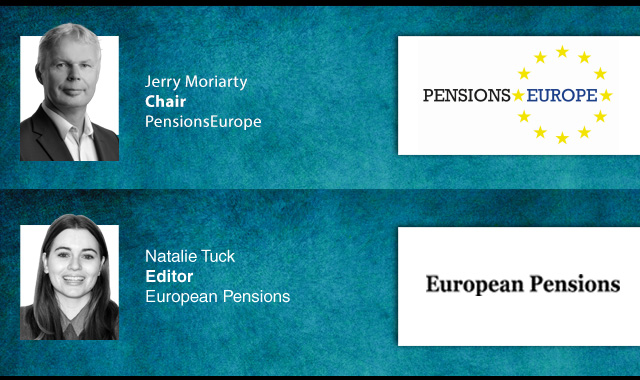
In the latest European Pensions podcast, Natalie Tuck talks to PensionsEurope chair, Jerry Moriarty, about his new role and the European pension policy agenda
Podcast: The benefits of private equity in pension fund portfolios

The outbreak of the Covid-19 pandemic, in which stock markets have seen increased volatility, combined with global low interest rates has led to alternative asset classes rising in popularity. Private equity is one of the top runners in this category, and for good reason.
In this podcast, Munich Private Equity Partners Managing Director, Christopher Bär, chats to European Pensions Editor, Natalie Tuck, about the benefits private equity investments can bring to pension fund portfolios and the best approach to take.
In this podcast, Munich Private Equity Partners Managing Director, Christopher Bär, chats to European Pensions Editor, Natalie Tuck, about the benefits private equity investments can bring to pension fund portfolios and the best approach to take.
Mitigating risk
BNP Paribas Asset Management’s head of pension solutions, Julien Halfon, discusses equity hedging with Laura Blows

© 2019 Perspective Publishing Privacy & Cookies
Recent Stories