European bank Nordea has revised up its 2011 economic outlook, in what it says will be a “transition year” with global growth below 2010 levels before showing renewed strength next year.
In a report published today, Nordea says that fiscal policy tightening is expected to result in weak growth in the Euro area during the forecast period, though this will vary widely between the countries.
While sovereign debt issues saw the Euro area find itself “in the eye of the hurricane” last year, the area is not on the brink of an imminent breakdown.
“One reason is that the Euro-area countries have become more unified during the crisis, which most recently was demonstrated at the December summit with the adoption of the permanent stability facility as a bailout for countries threatened by bankruptcy. Moreover, the ECB [European Central Bank] has gained more power and is now the main source for ensuring liquidity in countries whose banking sectors are still under severe pressure,” the report said.
Further, “it should not be underestimated” that the Economic and Monetary Union is a decisive means to achieve a political union in Europe, a project that “will not be abandoned based on one crisis.”
Nordea predicts “quite decent” growth from central and northern European countries, while crisis sentiment lingers south of the Alps and in Ireland.
The Nordic economies have shifted into a “higher gear”, led by strong performance from the Swedish economy. The report said that both Sweden and Denmark recovered strongly from the struggles of 2009, whilst a strong end to the year from Norway means the economy carries strong momentum into this year.
Rapid expansion of trading partners’ economies suggests that demand for Finnish exports will remain strong, and with demand expected to shift more towards investment goods the economic outlook in Finland is positive.
Nordea said recent economic indicators have “unequivocally” pointed to an accelerating upswing in the United States, while strong growth in Asian economies, particularly China, is expected to continue.
“This has heightened the risk of overheating and led to significant monetary policy tightening in both India and China. In China not least because of skyrocketing house prices. Still, we do not fear an actual economic setback, as we expect that the Chinese authorities will be able to steer the country safely through the twelfth 5-year plan with growth rates steady at the 8-9% mark,” the report stated.
Growth rates in the other ‘BRIC’ countries of Russia, India, and Brazil are also expected to remain high.
To download the full report, click here



Latest News
-
Pension schemes face duty to embrace AI within strict safeguards, expert says
-
EIOPA highlights pension policy work in 2025 annual report
-
Czech govt's proposed fee cuts will not cover costs and lead to ‘market paralysis’ - APS ČR
-
Finland’s pension reform strengthens financing outlook; uncertainty grows over TyEL contributions
-
Greek occupational pension fund assets reach €2,859m at the end of Q1 – Bank of Greece
-
Irish Pensions Awards 2026: Deadline extended




Podcast: Stepping up to the challenge
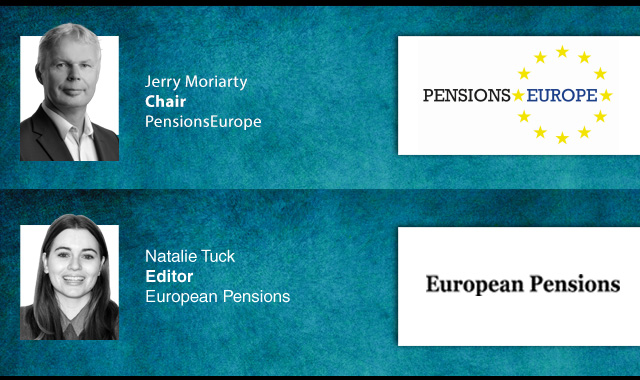
In the latest European Pensions podcast, Natalie Tuck talks to PensionsEurope chair, Jerry Moriarty, about his new role and the European pension policy agenda
Podcast: The benefits of private equity in pension fund portfolios

The outbreak of the Covid-19 pandemic, in which stock markets have seen increased volatility, combined with global low interest rates has led to alternative asset classes rising in popularity. Private equity is one of the top runners in this category, and for good reason.
In this podcast, Munich Private Equity Partners Managing Director, Christopher Bär, chats to European Pensions Editor, Natalie Tuck, about the benefits private equity investments can bring to pension fund portfolios and the best approach to take.
In this podcast, Munich Private Equity Partners Managing Director, Christopher Bär, chats to European Pensions Editor, Natalie Tuck, about the benefits private equity investments can bring to pension fund portfolios and the best approach to take.
Mitigating risk
BNP Paribas Asset Management’s head of pension solutions, Julien Halfon, discusses equity hedging with Laura Blows

© 2019 Perspective Publishing Privacy & Cookies
Recent Stories