A new report from the European Insurance and Occupational Pensions Authority (EIOPA) has suggested that a mix of individual choice and professional assistance is likely to deliver the best member outcomes in mitigating risk for defined contribution (DC) scheme members.
EIOPA yesterday published two reports, Report on Risks Related to Defined Contribution Pension Plan Members and a Report on Risk Mitigation Mechanisms for Defined Contribution Related Risks, looking at the risks members face in DC arrangements and the mitigation measures in use in member states.
The analysis showed members of “pure DC” schemes bear all of the risk arising from decisions made in relation to their plan in many cases, though their ability to influence these decisions was quite limited.
The research concluded that most of the risks arise from the decisions made in the accumulation of funds, and two main mitigation approaches were revealed.
One was to facilitate members’ decision making by providing them with all the relevant information, and allow individuals to make choices according to their risk appetite and future benefits expectations.
Another approach was to minimise the decisions and choices members need to make, shifting more responsibility onto professionals.
EIOPA concluded there would be “odds and shortages” for both approaches, and did not carry on to state which approach would be more appropriate in different circumstances.
It stated that a “good balance” between risk mitigation mechanisms providing choices for members to decide themselves and mechanisms to shift responsibility away from individuals would probably produce the best results.
“The individuals are very different in their attitude to the retirement benefits accrual process. Some of them would expect direct involvement into this process and would be ready to actively make necessary decisions. Others on their turn would appreciate possibility to stay passive and allow other persons to make the necessary decisions for them,” the report said.
The report also found that while there are risk mitigation mechanisms which are mandatory under the legislation in the relevant member states, other measures are put in place voluntarily on a best practice basis.
“This approach could be more flexible and therefore able to duly react to the changes in individuals’ attitude to the risk mitigation process. That could in some circumstances provide better results in achieving the aim to provide sufficient retirement benefits to the individuals.”
Access the DC risk reports here



Latest News
-
Swedish court continuing to review Indecap’s dispute with FTN
-
PFA welcomes SpaceX IPO as Danish pension funds split on company
-
UK's Smart Pension surpasses £10bn AUM
-
Swedish occupational pension assets increase by SEK13bn in Q1
-
UK DB funding surplus rises by £5.3bn in May
-
Pensions sector among least affected by major ICT incidents in 2025 – ESAs




Podcast: Stepping up to the challenge
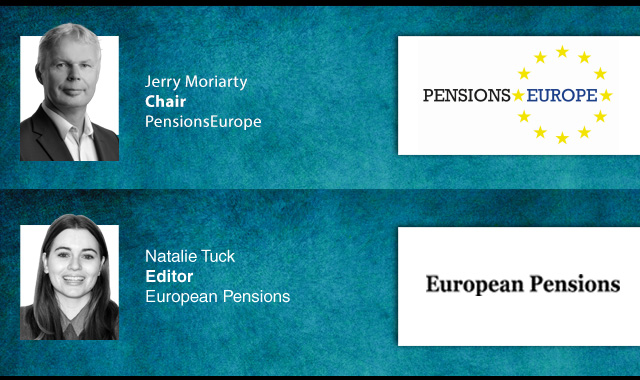
In the latest European Pensions podcast, Natalie Tuck talks to PensionsEurope chair, Jerry Moriarty, about his new role and the European pension policy agenda
Podcast: The benefits of private equity in pension fund portfolios

The outbreak of the Covid-19 pandemic, in which stock markets have seen increased volatility, combined with global low interest rates has led to alternative asset classes rising in popularity. Private equity is one of the top runners in this category, and for good reason.
In this podcast, Munich Private Equity Partners Managing Director, Christopher Bär, chats to European Pensions Editor, Natalie Tuck, about the benefits private equity investments can bring to pension fund portfolios and the best approach to take.
In this podcast, Munich Private Equity Partners Managing Director, Christopher Bär, chats to European Pensions Editor, Natalie Tuck, about the benefits private equity investments can bring to pension fund portfolios and the best approach to take.
Mitigating risk
BNP Paribas Asset Management’s head of pension solutions, Julien Halfon, discusses equity hedging with Laura Blows

© 2019 Perspective Publishing Privacy & Cookies
Recent Stories