Earnings growth will fall 7% for Europe and 3% for the US in 2012 as global equities - particularly financials and cyclical sectors - suffer during the third quarter, ING Investment Management said.
“The third quarter has been awful for global equities. Until June the underperformance was mainly concentrated in the financial sector with cyclicals and defensives moving largely in line. Since July however, the cyclical worries clearly intensified causing a sharp sell-off in cyclical, especially commodity-related sectors,” senior equity strategist at ING IM Patrick Moonen said.
“This observation clearly indicates the main issues investors are currently worried about: the Euro-debt crisis transforming into a systemic risk for the entire financial sector and an economic slowdown that goes beyond a soft patch. To make things worse, both elements are interrelated and can launch or even reinforce a negative spiral.”
ING IM believes not even emerging markets can offer much relief as financial decoupling is still a myth. According to the investment manager, the high correlation with developed equity markets and the high beta of emerging markets makes them vulnerable to a surge in global risk aversion, while the link with commodity prices remains very strong and in a period of lower global growth and high risk aversion, commodities will struggle to rise.
A mild recession has become Europe’s base case, and ING IM has therefore downgraded their 2012 earnings forecasts further. With an expected decline of 7%, European earnings would be back at the level of end 2010. Moonen explained: “From the top, (trailing earnings peaked in July) this would correspond with a decline of 13%. This is comparable to the decline we witnessed in the 2002/03 recession. The underlying assumption is a revenue growth of 4% and a decline in the net profit margin by 80 bps from 7.3% to 6.5%.”
Equities are attractively priced, compared to the government bond market, he said. “Equity risk premiums are high even if we take into account a 20% cut in dividends next year followed by 0% dividend growth in 2013. These are severe assumptions given the good health of corporate balance sheets and the low pay-out ratios.
“In conclusion, after this quarter’s sell-off, equities have quickly caught up with the reality of lower earnings growth. Although valuations are becoming attractive, we think that these still do not offer enough downside protection against an increase in systemic risk that the Euro sovereign debt crisis may provoke. Only an improvement on this front could lead to a sustainable upward move in equities. In the meantime, volatility will remain high.”



Latest News
-
Swedish court continuing to review Indecap’s dispute with FTN
-
PFA welcomes SpaceX IPO as Danish pension funds split on company
-
UK's Smart Pension surpasses £10bn AUM
-
Swedish occupational pension assets increase by SEK13bn in Q1
-
UK DB funding surplus rises by £5.3bn in May
-
Pensions sector among least affected by major ICT incidents in 2025 – ESAs




Podcast: Stepping up to the challenge
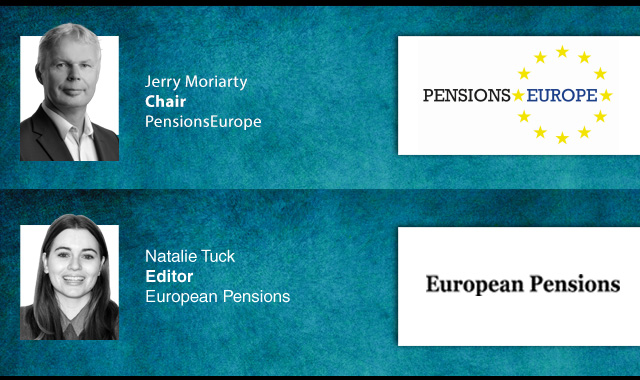
In the latest European Pensions podcast, Natalie Tuck talks to PensionsEurope chair, Jerry Moriarty, about his new role and the European pension policy agenda
Podcast: The benefits of private equity in pension fund portfolios

The outbreak of the Covid-19 pandemic, in which stock markets have seen increased volatility, combined with global low interest rates has led to alternative asset classes rising in popularity. Private equity is one of the top runners in this category, and for good reason.
In this podcast, Munich Private Equity Partners Managing Director, Christopher Bär, chats to European Pensions Editor, Natalie Tuck, about the benefits private equity investments can bring to pension fund portfolios and the best approach to take.
In this podcast, Munich Private Equity Partners Managing Director, Christopher Bär, chats to European Pensions Editor, Natalie Tuck, about the benefits private equity investments can bring to pension fund portfolios and the best approach to take.
Mitigating risk
BNP Paribas Asset Management’s head of pension solutions, Julien Halfon, discusses equity hedging with Laura Blows

© 2019 Perspective Publishing Privacy & Cookies
Recent Stories