The Swiss Funds Association (SFA) has welcomed the introduction of the Key Investor Information Document (KID), which will replace the simplified prospectuses supplied for UCITS publicly marketed in the EU from 1 July.
In a statement, the SFA said the KID is to be written in readily understandable form and is to comprise no more than two A-4 pages, or three A-4 pages in the case of structured funds.
Improvements over the simplified prospectus included that the new synthetic risk and reward indicator will be mandatory, and will express the risk/return profile of a fund as a number between 1 (lower risk/typically lower rewards) and 7 (higher risk/typically higher rewards).
The introduction of the KID, required under the EU’s UCITS IV Directive, is subject to a one year transition period.
Minor amendments are required to the Swiss collective investment schemes legislation (CISO), which could be implemented in the Federal Council’s Ordinance. Corresponding amendments to the CISO will enter into force on 15 July 2011.
SFA president Martin Thommen thanked the authorities involved for dealing with the matter quickly, and reaching a prompt decision.
Thommen said that introducing the KID in Switzerland at the same time as in the EU is in the interests of all Swiss and foreign fund promoters who market their UCITS in the country.
“This means that they now need only produce a concise information document, which also increases transparency for investors. The SFA will clarify the further questions relating to technical implementation with FINMA [Swiss Financial Markets Authority] as quickly as possible. We will incorporate the detailed regulations of the EU supervisory authorities on the KID (CESR Guidelines) in the form of SFA self-regulation material, and submit this to FINMA for approval.”



Latest News
-
DC now ‘dominating’ FTSE 350 companies’ pension spending as employer contributions fall
-
Italian supplementary pension coverage climbs to 40%; gender gap remains
-
Sampension joins investor call to protect EU carbon trading scheme
-
PFA welcomes SpaceX IPO as Danish pension funds split on company
-
AZL surpasses 800,000 Wtp participants after completing first pension transitions
-
UK's Smart Pension surpasses £10bn AUM




Podcast: Stepping up to the challenge
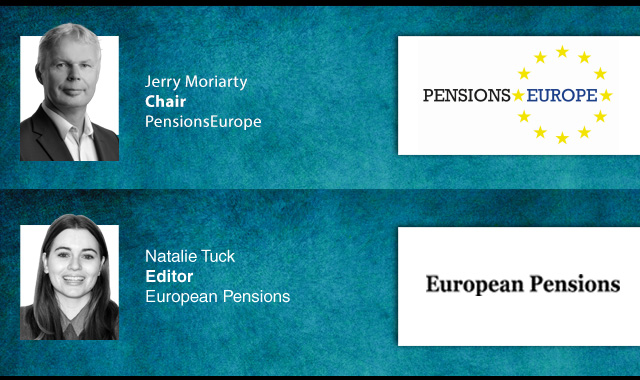
In the latest European Pensions podcast, Natalie Tuck talks to PensionsEurope chair, Jerry Moriarty, about his new role and the European pension policy agenda
Podcast: The benefits of private equity in pension fund portfolios

The outbreak of the Covid-19 pandemic, in which stock markets have seen increased volatility, combined with global low interest rates has led to alternative asset classes rising in popularity. Private equity is one of the top runners in this category, and for good reason.
In this podcast, Munich Private Equity Partners Managing Director, Christopher Bär, chats to European Pensions Editor, Natalie Tuck, about the benefits private equity investments can bring to pension fund portfolios and the best approach to take.
In this podcast, Munich Private Equity Partners Managing Director, Christopher Bär, chats to European Pensions Editor, Natalie Tuck, about the benefits private equity investments can bring to pension fund portfolios and the best approach to take.
Mitigating risk
BNP Paribas Asset Management’s head of pension solutions, Julien Halfon, discusses equity hedging with Laura Blows

© 2019 Perspective Publishing Privacy & Cookies
Recent Stories