The ongoing banking and Eurozone crisis, contagion in terms of systemic risk, the global financial crisis, and credibility around policymakers and their ability to develop the right solutions will be the key themes affecting asset classes in 2012, according to ING Investment Management.
At its annual outlook conference earlier this week, ING IM warned that policymakers need to think out of the box and develop more creative policy instruments, as the current problems cannot be solved by the same thinking that created them.
Valentijn van Nieuwenhuijzen, head of strategy, strategy and tactical asset allocation group at ING IM, said that Europe is already in a recession. “Growth has to be -0.5% to be called a recession. This wasn’t the case yet in quarter three, but we believe this has happened in quarter four already.” He added that the European economy is unlikely to escape from recession anytime soon.
He also pointed out that despite the large slowdown, we have not seen a strong recovery and while growth will be less, it will also be less certain.
Although Europe will see less growth and more volatility in 2012, global growth will be better, but still very fragile. ING IM estimates that real GDP growth in the US, UK and Eurozone will decline to 1.5%, 0.5% and 0.3%, respectively. Japan’s growth is picked to rise from -0.4% this year to 1.8% next year. For China growth will fall from an estimated 9.1% this year to 7.9% in 2012, and emerging markets growth will decline to an estimated 5.7%.
Equity investors will see a high degree of uncertainty with high levels of volatility and correlation, but ING IM said companies are in good shape with strong balance sheets and high profitability. It expects the developed markets equity indices to rise by 5 to 6%, while the emerging markets could resume outperformance in 2012 with an anticipated 15% return.
Patrick Moonen, senior equity strategist at ING IM, said: “The superior fundamentals of emerging market equities when compared to those from the developed markets have not translated into outperformance because there is a strong correlation in markets between the two. Fundamentals have been overruled by market forces. However, next year could see outperformance resume because of relative earnings growing emerging markets and policy measures designed to stimulate domestic demand. Much will depend on a higher risk appetite amongst investors, and an improvement in the global growth cycle.”
On the fixed income side, ING IM recommended being overweight to emerging market debt, especially in hard currency, global high yield fixed income products and senior bank loans, preferring this to Euro-related investment grade paper.
Van Nieuwenhuijzen explained that opportunities in emerging markets and high yield come with a higher degree of risk. In the fixed income space, investors can decide to settle for lower returns on less riskier bonds or receive a higher return and accept the higher risks involved with investing in emerging markets and high yield.



Latest News
-
Pension schemes face duty to embrace AI within strict safeguards, expert says
-
EIOPA highlights pension policy work in 2025 annual report
-
Czech govt's proposed fee cuts will not cover costs and lead to ‘market paralysis’ - APS ČR
-
Finland’s pension reform strengthens financing outlook; uncertainty grows over TyEL contributions
-
Greek occupational pension fund assets reach €2,859m at the end of Q1 – Bank of Greece
-
Irish Pensions Awards 2026: Deadline extended




Podcast: Stepping up to the challenge
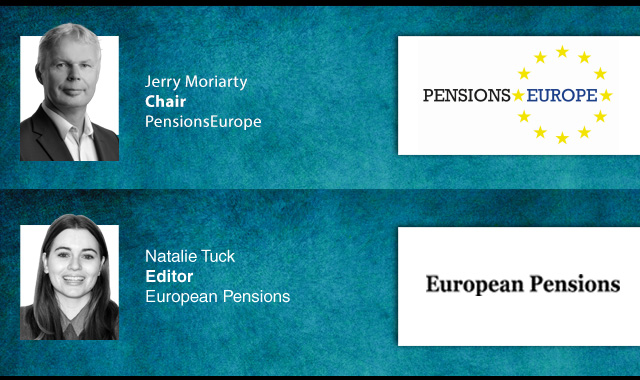
In the latest European Pensions podcast, Natalie Tuck talks to PensionsEurope chair, Jerry Moriarty, about his new role and the European pension policy agenda
Podcast: The benefits of private equity in pension fund portfolios

The outbreak of the Covid-19 pandemic, in which stock markets have seen increased volatility, combined with global low interest rates has led to alternative asset classes rising in popularity. Private equity is one of the top runners in this category, and for good reason.
In this podcast, Munich Private Equity Partners Managing Director, Christopher Bär, chats to European Pensions Editor, Natalie Tuck, about the benefits private equity investments can bring to pension fund portfolios and the best approach to take.
In this podcast, Munich Private Equity Partners Managing Director, Christopher Bär, chats to European Pensions Editor, Natalie Tuck, about the benefits private equity investments can bring to pension fund portfolios and the best approach to take.
Mitigating risk
BNP Paribas Asset Management’s head of pension solutions, Julien Halfon, discusses equity hedging with Laura Blows

© 2019 Perspective Publishing Privacy & Cookies
Recent Stories