The European Central Bank cut its main policy interest rate from 1.50 per cent to 1.25 per cent in an effort to boost market confidence and reduce the risk of a recession in the European Union. Industry figures have responded with little surprise and some say it has not gone far enough.
Sandra Holdsworth, fixed income investment manager at Kames Capital, said the cut in interest rates did not come as a surprise as the economic and political outlook in the Eurozone has been deteriorating for some months now.
“[On Monday], even in Germany, the latest employment report showed the first increase in unemployment since 2009. Even sharper increases have been seen in some of the other countries of the Eurozone, with this backdrop added to the very high levels of political risk in the region, the Central Bank has finally realised there are more downside risks to the current level of inflation at 3 per cent than upside ones,” she said.
Azad Zangana, European economist at Schroders, added that it is unlikely the cut will have much of an impact on the real economy. “Money market rates have been trading well below the ECB’s policy rate ever since the re-introduction of three-month liquidity auctions. The ECB is likely to take interest rates back to one per cent in the coming months as we are unlikely to see a resolution to the Greek crisis anytime soon.”
According to Dan Morris, global strategist at J.P. Morgan Asset Management, the ECB has not gone far enough. He explained: “The 25 bps cut by the ECB may have been bold politically given the sensitivities surrounding the first decision of the new bank president, but it is not bold enough given the economic challenges facing the Eurozone. The original 50 bps in hikes over this year were ill-advised even at the time when the region's growth appeared much stronger than it does today. The hikes should have been reversed completely and even greater cuts implemented given the growing risk of recession in Europe. “
Mark Hewlett, managing partner of Anello Asset Management, said he hopes the cut in rates is not the start of a more market reactionary ECB. “Trichet kept the focus on price stability and independence from the markets and governments. The press conference after the announcement did something to reassure that the ECB will not throw unlimited amounts of money at the problems Europe is facing but it would be easy to undo the good work to date to ensure the currency is sound over the longer term, regardless of the poor political decisions and which countries are left using the Euro in the future.”
He added: "Price action over the next few sessions may be to reward this seemingly doveish move but let's be honest who's borrowing apart from governments at the moment and aren't rates low enough?"



Latest News
-
DC now ‘dominating’ FTSE 350 companies’ pension spending as employer contributions fall
-
Italian supplementary pension coverage climbs to 40%; gender gap remains
-
Sampension joins investor call to protect EU carbon trading scheme
-
PFA welcomes SpaceX IPO as Danish pension funds split on company
-
AZL surpasses 800,000 Wtp participants after completing first pension transitions
-
UK's Smart Pension surpasses £10bn AUM




Podcast: Stepping up to the challenge
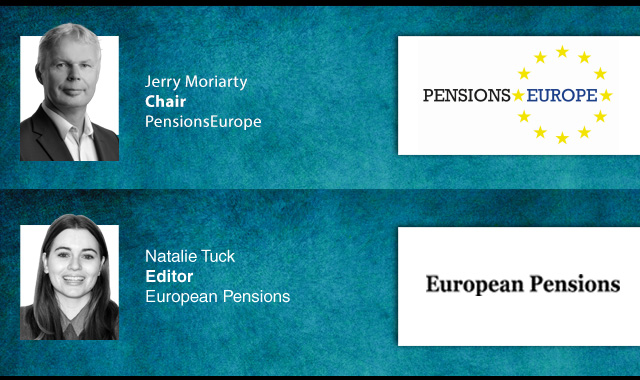
In the latest European Pensions podcast, Natalie Tuck talks to PensionsEurope chair, Jerry Moriarty, about his new role and the European pension policy agenda
Podcast: The benefits of private equity in pension fund portfolios

The outbreak of the Covid-19 pandemic, in which stock markets have seen increased volatility, combined with global low interest rates has led to alternative asset classes rising in popularity. Private equity is one of the top runners in this category, and for good reason.
In this podcast, Munich Private Equity Partners Managing Director, Christopher Bär, chats to European Pensions Editor, Natalie Tuck, about the benefits private equity investments can bring to pension fund portfolios and the best approach to take.
In this podcast, Munich Private Equity Partners Managing Director, Christopher Bär, chats to European Pensions Editor, Natalie Tuck, about the benefits private equity investments can bring to pension fund portfolios and the best approach to take.
Mitigating risk
BNP Paribas Asset Management’s head of pension solutions, Julien Halfon, discusses equity hedging with Laura Blows

© 2019 Perspective Publishing Privacy & Cookies
Recent Stories