Germany quickly recovered from the 2008-09 recession, with GDP topping pre-crisis rates during 2011 and unemployment falling significantly, but it now faces a cyclical return to slower growth rates and challenges to lay the foundations for long-term growth, according to the OECD’s latest Economic Survey of Germany.
The global slowdown, the deterioration of world trade and the eurozone crisis pose many downside risks. However, as one of the biggest and most important economies in Europe, growth-enhancing structural reforms can make an important contribution to stronger and more balanced growth perspectives in Germany and the eurozone, the report said.
“Germany’s recent economic performance has been exceptional, with low unemployment and solid growth. Many other countries are looking at the German mix of labour market reforms, social partners’ constructive flexibility and sound fiscal policy,” OECD secretary-general Angel Gurría said.
“But moving ahead towards a knowledge based economy will require further policy reform. With the population ageing rapidly, more needs to be done to raise the medium- and long-term growth potential, notably through reforms that boost domestic demand, increase productivity growth and expand the labour force.”
The OECD said Germany should raise labour inputs to avoid skill shortages, by investing in skills, lowering fiscal disincentives to work for two-income households and encouraging women to take up full-time work by further improving the supply of child care. Additionally, employment of older workers could be promoted and labour migration could be better focused on economic needs by lowering the hurdles for high-skilled migrants.



Latest News
-
DC now ‘dominating’ FTSE 350 companies’ pension spending as employer contributions fall
-
Italian supplementary pension coverage climbs to 40%; gender gap remains
-
Sampension joins investor call to protect EU carbon trading scheme
-
PFA welcomes SpaceX IPO as Danish pension funds split on company
-
AZL surpasses 800,000 Wtp participants after completing first pension transitions
-
UK's Smart Pension surpasses £10bn AUM




Podcast: Stepping up to the challenge
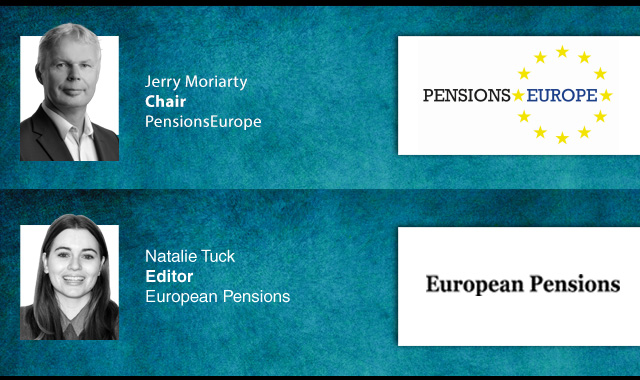
In the latest European Pensions podcast, Natalie Tuck talks to PensionsEurope chair, Jerry Moriarty, about his new role and the European pension policy agenda
Podcast: The benefits of private equity in pension fund portfolios
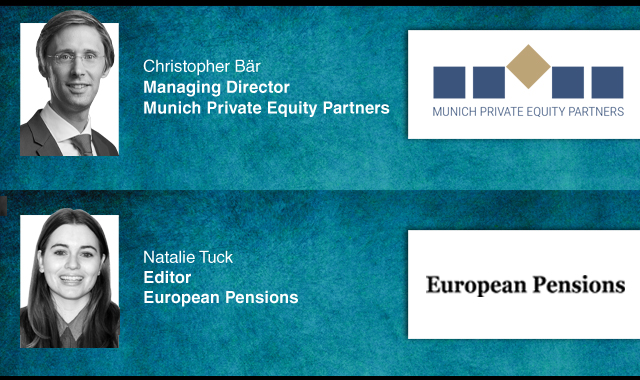
The outbreak of the Covid-19 pandemic, in which stock markets have seen increased volatility, combined with global low interest rates has led to alternative asset classes rising in popularity. Private equity is one of the top runners in this category, and for good reason.
In this podcast, Munich Private Equity Partners Managing Director, Christopher Bär, chats to European Pensions Editor, Natalie Tuck, about the benefits private equity investments can bring to pension fund portfolios and the best approach to take.
In this podcast, Munich Private Equity Partners Managing Director, Christopher Bär, chats to European Pensions Editor, Natalie Tuck, about the benefits private equity investments can bring to pension fund portfolios and the best approach to take.
Mitigating risk
BNP Paribas Asset Management’s head of pension solutions, Julien Halfon, discusses equity hedging with Laura Blows

© 2019 Perspective Publishing Privacy & Cookies
Recent Stories