European institutional investors have increased their allocation to fixed income in 2010, while allocations to equities decreased and real estate maintained its position in investor portfolios, according to the eleventh edition of the European Institutional Asset Management Survey (EIAMS) by Invesco.
Allocations to fixed income rose to 58% in 2010, up from 51% the previous year and the highest level since 2006. Equities fell from 29% in 2009 to 27% in 2010, while alternatives remained at 12% of portfolios, with real estate retaining its average 7% share. Cash holdings shrank to 2%, compared to 5% in 2009 and 10% in 2008 as investors returned to the markets.
The outlook for fixed income remains positive, as 22% of respondents said they were planning to increase their exposure to fixed income, compared to 16% aiming to reduce their allocation. Although more than one-fifth plan to increase their allocation, 31% are reducing their government bond holdings, with 30% opting for corporate bonds.
European investors also increasingly focus on emerging market debt due to concerns over inflation, low government bond yields and the growing perception that developed economies’ sovereign debt can no longer be viewed as a risk-free asset class.
Despite fixed income being most popular, 19% of investors plan to raise their equity stakes and 26% their real estate allocations, while 15% and 7% respectively plan to reduce these portfolio components. Just over one-fifth (21%) of respondents aim to reduce their cash allocation in 2011, while 5% plan to increase it. Alternatives are also proving more popular, as respectively 15% and 34% of investors aim to increase allocations to commodities and ‘other alternatives’, with 3% and 9% indicating a decrease.
The use of external investment consultants fell from 52% in 2009 to 49% in 2010, with medium investors remaining the largest users of consultants, while larger and smaller investors are steadily declining their usage over the last three years.
However, the use of external managers has risen from 64% to 67%, although the number of investors terminating their relationships with external managers rose to 53% from 40% in 2009.
“Poor performance as ever is usually the trigger, but many investors seem to be venturing into new territory – and will sack those managers who cannot chart the way,” Michael Gartmann, managing director and head of institutional business Germany at Invecso explained. He believed this may reflect a more confident attitude towards investing.
“Having weathered the first storms of the recent financial crisis by sticking to the tried and tested, investors now feel they are in a position to flex their muscles.”



Latest News
-
Finnish pension reforms to come into force from 1 July
-
Icelandic pension funds Gildi and Festa begin merger talks
-
Germany's DAI calls for wider use of equities in German pensions
-
Finnish earnings-related pension providers' solvency ratio falls to 129.5%
-
The Netherlands’ Hoogovens Pension Fund returns 2.7% in 2025
-
Dutch pension fund Haskoning selects Van Lanschot Kempen as fiduciary manager




Podcast: Stepping up to the challenge
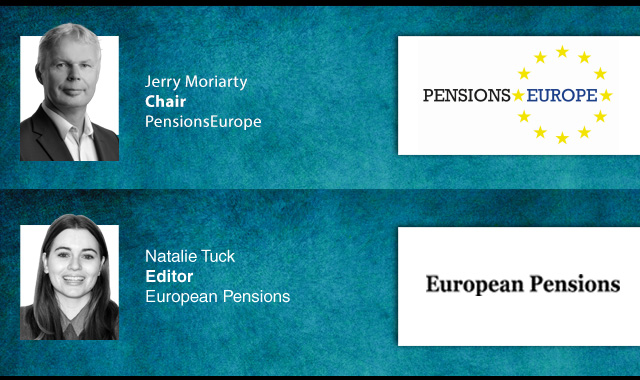
In the latest European Pensions podcast, Natalie Tuck talks to PensionsEurope chair, Jerry Moriarty, about his new role and the European pension policy agenda
Podcast: The benefits of private equity in pension fund portfolios

The outbreak of the Covid-19 pandemic, in which stock markets have seen increased volatility, combined with global low interest rates has led to alternative asset classes rising in popularity. Private equity is one of the top runners in this category, and for good reason.
In this podcast, Munich Private Equity Partners Managing Director, Christopher Bär, chats to European Pensions Editor, Natalie Tuck, about the benefits private equity investments can bring to pension fund portfolios and the best approach to take.
In this podcast, Munich Private Equity Partners Managing Director, Christopher Bär, chats to European Pensions Editor, Natalie Tuck, about the benefits private equity investments can bring to pension fund portfolios and the best approach to take.
Mitigating risk
BNP Paribas Asset Management’s head of pension solutions, Julien Halfon, discusses equity hedging with Laura Blows

© 2019 Perspective Publishing Privacy & Cookies
Recent Stories