Pension schemes should be exempt from new information requirements for investment products, the European pension fund lobby group has said.
The Regulation of the European Parliament and of the Council on key information documents for investment products (PRIPS) aims to improve the quality of information provided to consumers when considering investments. It will do this through introducing a new standard for product information, named the 'Key Information Document' (KID).
PensionsEurope has argued the drafting of the current European Commission proposals would mean the rules would apply to occupational pension schemes, despite this being contrary to the aim of the new regulations. Doing so could damage the coverage of occupational pensions in Europe, the association said, as an increase in administrative costs could act as a deterrent from employers offering the schemes.
In a position paper on the issue, PensionsEurope said that PRIPS is not appropriate for occupational pension schemes and these should therefore be excluded from the regulations.
“A full and unambiguous exemption should be included in the final PRIPS regulation to this extent. A clear distinction should be made between occupational pensions on the one hand and personal pensions on the other. Occupational pensions are not a “financial product”, but are a social benefit the employer offers with an employment contract.”
PensionsEurope stressed that while it supports providing clear and transparent information on occupational pensions, the specific characteristics of the schemes mean the PRIPS regulation is not the appropriate way to do this.
The association said that although there was scope to include personal pensions in the PRIPS project at a later date, these should also be exempt for the time being.
PensionsEurope suggested awaiting the outcome of the different initiatives that the European Commission and the European Insurance and Occupational Pensions Authority are undertaking in the field of personal pensions.
“It should be noted that, unlike other retail financial products, personal pensions play an important role in Member States’ overall social protection systems, especially in Member States with limited reliance on work-related pensions,” the association said.
“In such cases those pension schemes perform a fundamentally different public policy objective from other retail investment products; as a consequence, different regulatory considerations must be taken into account.”



Latest News
-
Dutch pension sector must become more ‘resilient and agile’ in uncertain world
-
Middle East conflict causes UK DB funding ‘deterioration’ in March
-
AAE signals readiness to support AI Act implementation
-
Swedish self-employed show stark gap between pension awareness and action
-
News in brief: 10 April
-
Just 13% of self-select savers in Sweden’s premium pension system outperform AP7 Såfa




Podcast: Stepping up to the challenge
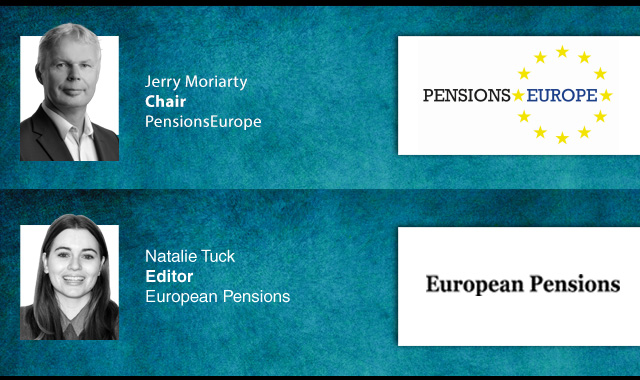
In the latest European Pensions podcast, Natalie Tuck talks to PensionsEurope chair, Jerry Moriarty, about his new role and the European pension policy agenda
Podcast: The benefits of private equity in pension fund portfolios

The outbreak of the Covid-19 pandemic, in which stock markets have seen increased volatility, combined with global low interest rates has led to alternative asset classes rising in popularity. Private equity is one of the top runners in this category, and for good reason.
In this podcast, Munich Private Equity Partners Managing Director, Christopher Bär, chats to European Pensions Editor, Natalie Tuck, about the benefits private equity investments can bring to pension fund portfolios and the best approach to take.
In this podcast, Munich Private Equity Partners Managing Director, Christopher Bär, chats to European Pensions Editor, Natalie Tuck, about the benefits private equity investments can bring to pension fund portfolios and the best approach to take.
Mitigating risk
BNP Paribas Asset Management’s head of pension solutions, Julien Halfon, discusses equity hedging with Laura Blows


© 2019 Perspective Publishing Privacy & Cookies
Recent Stories