Institutional investors are showing ongoing confidence in the Euro, with about 80% of respondents saying the Euro will survive under the current circumstances, whilst only 4% said it won’t, according to a survey conducted by Allianz Global Investors in 11 European countries.
The relatively high share of respondents who were undecided about the fate of the Euro shows that the sovereign debt crisis in the Eurozone is seen as a major concern or risk among institutional investors. However, there were no major differences between the views of those in the Eurozone and respondents in other European countries.
According to RCM, a company of Allianz Global Investors, an all-out Greek default and restructuring is unlikely before 2013. As the recent bail out of Portugal has shown, European policy makers are still keen to avoid the significant fallout from a possible default, with the European banking sector in particular still in recovery mode.
Andreas Utermann, global chief investment officer at RCM, said: “The required primary budget surplus in the area of 8% of Gross Domestic Product is difficult to achieve, but policy makers will try to buy time, so that financial institutions can further improve their balance sheets and Greece its primary fiscal balance. A hasty restructuring could lead to a new financial crisis, as the European Central Bank (ECB) has repeatedly pointed out, with banks, especially in Greece, taking a hit because of write-offs on their bond position.
“Secondly, as long as Greece does not generate a primary surplus, which it does not so far, any debt restructuring would not be perceived by market participants as credible. We are thus likely to see a continuation of small steps, perhaps initially further reducing the cost of the bailout to Greece by cutting the interest rate on the bailout funds and then lengthening maturities, perhaps on a voluntary basis.”
Nevertheless, most participants expect gradual progress towards economic and policy integration in the Eurozone. Furthermore, many anticipate tighter regulation, and a more centralised fiscal policy which would lead to more responsibilities assigned to the ECB. Another possibility mentioned by some respondents is the increasing influence of the core countries, such as France and Germany.
More than 150 institutional investors managing or advising assets totalling €990 billion answered the survey which was conducted in March and April 2011. The full report is due to be published in June.



Latest News
-
Swedish court continuing to review Indecap’s dispute with FTN
-
PFA welcomes SpaceX IPO as Danish pension funds split on company
-
UK's Smart Pension surpasses £10bn AUM
-
Swedish occupational pension assets increase by SEK13bn in Q1
-
UK DB funding surplus rises by £5.3bn in May
-
Pensions sector among least affected by major ICT incidents in 2025 – ESAs




Podcast: Stepping up to the challenge
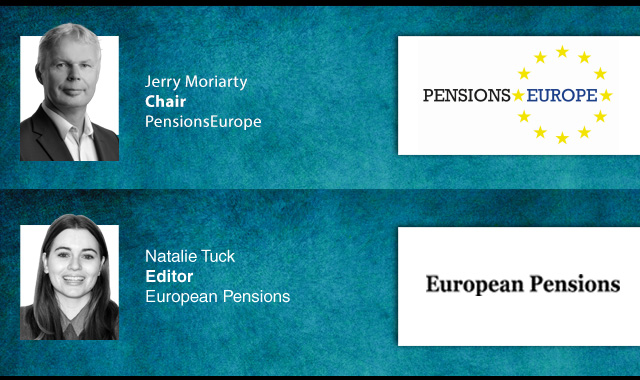
In the latest European Pensions podcast, Natalie Tuck talks to PensionsEurope chair, Jerry Moriarty, about his new role and the European pension policy agenda
Podcast: The benefits of private equity in pension fund portfolios

The outbreak of the Covid-19 pandemic, in which stock markets have seen increased volatility, combined with global low interest rates has led to alternative asset classes rising in popularity. Private equity is one of the top runners in this category, and for good reason.
In this podcast, Munich Private Equity Partners Managing Director, Christopher Bär, chats to European Pensions Editor, Natalie Tuck, about the benefits private equity investments can bring to pension fund portfolios and the best approach to take.
In this podcast, Munich Private Equity Partners Managing Director, Christopher Bär, chats to European Pensions Editor, Natalie Tuck, about the benefits private equity investments can bring to pension fund portfolios and the best approach to take.
Mitigating risk
BNP Paribas Asset Management’s head of pension solutions, Julien Halfon, discusses equity hedging with Laura Blows

© 2019 Perspective Publishing Privacy & Cookies
Recent Stories