The European Commission has asked Germany and Belgium to bring their pensions practises into line with EU law or risk being taken to the EU’s Court of Justice.
In Germany’s case, the Commission has been alerted to a case of a Bulgarian man, now German national, who has lived in Germany for 50 years. The man has received a German old age pension since 1988.
However, Commission said the man has been informed that if he takes up residence in Bulgaria, the amount of his pension transferred to Bulgaria would be reduced by more than one third to less than €400.
The Commission said the agreement established between Bulgaria and Germany prior to Bulgaria joining the EU provides for the payment of a differential supplement.
“To calculate this supplement, a comparison is made between the work periods acquired in Bulgaria and in Germany and the theoretical amount which is based on a calculation as if all periods were acquired in the country of residence. According to Germany, if the citizen moves to Bulgaria, he loses this differential amount since Germany is no longer the state of residence,” the Commission said in a statement.
By way of a 'reasoned opinion' under EU infringement procedures the Commission has notified Germany it has two months to inform the Commission of measures it has taken to bring its legislation into line with EU law. Otherwise the Commission may decide to refer Germany to the EU's Court of Justice.
In a separate statement, the Commission has asked Belgium to end “complex procedures” for paying pensions to beneficiaries residing in other EU countries.
“By refusing to pay pensions directly to a bank account and using cross border payments, Belgian pensions beneficiaries in 19 EU countries suffer delayed access to their pension, as well as disproportionate costs and other inconveniences. This contravenes the EU right to move freely to and receive their pension in another EU country,” the Commission said.
Belgium has two months to inform Commission of measures it has taken to bring its legislation into line with EU law, or the Commission may decide to refer the country to the EU's Court of Justice.
Today’s announcement follows action in February, in which the Commission announced it had decided to take Spain and Belgium to the Court of Justice.



Latest News
-
Cyprus targets January 2027 launch for pension reform
-
Swedish occupational pension assets increase by SEK13bn in Q1
-
UK DB funding surplus rises by £5.3bn in May
-
Pensions sector among least affected by major ICT incidents in 2025 – ESAs
-
OECD urges Estonia to scrap 10-year wait to rejoin second pension pillar
-
Czech pension providers set to challenge govt's proposed fee cuts




Podcast: Stepping up to the challenge
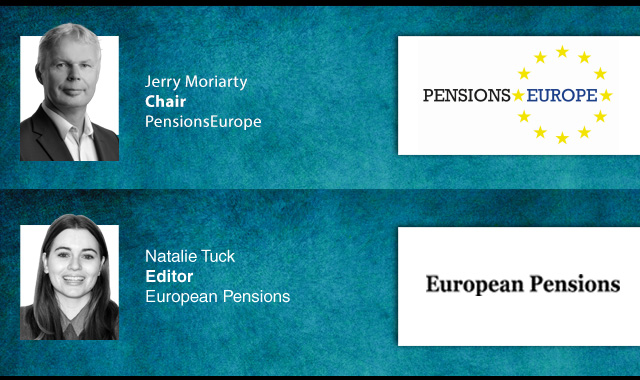
In the latest European Pensions podcast, Natalie Tuck talks to PensionsEurope chair, Jerry Moriarty, about his new role and the European pension policy agenda
Podcast: The benefits of private equity in pension fund portfolios

The outbreak of the Covid-19 pandemic, in which stock markets have seen increased volatility, combined with global low interest rates has led to alternative asset classes rising in popularity. Private equity is one of the top runners in this category, and for good reason.
In this podcast, Munich Private Equity Partners Managing Director, Christopher Bär, chats to European Pensions Editor, Natalie Tuck, about the benefits private equity investments can bring to pension fund portfolios and the best approach to take.
In this podcast, Munich Private Equity Partners Managing Director, Christopher Bär, chats to European Pensions Editor, Natalie Tuck, about the benefits private equity investments can bring to pension fund portfolios and the best approach to take.
Mitigating risk
BNP Paribas Asset Management’s head of pension solutions, Julien Halfon, discusses equity hedging with Laura Blows

© 2019 Perspective Publishing Privacy & Cookies
Recent Stories