Three of the five big Dutch pension funds will cut pension payments next year, if their financial position does not improve this year.
Pensioenfonds ABP, PME, PMT, Bedrijfstakpensioenfonds voor de Bouwnijverheid (BPF Bouw) and Pensioenfonds Zorg en Welzijn (PFZW) today released their official end-of-year figures for 2011. Based on the funding level of 31 December, pension funds will have to take additional steps to improve their funding level, if it is not in line with their recovery plans.
Civil service fund ABP will increase pension premiums and said pension cuts are “a realistic option”, now that the coverage ratio is 94%, well below the minimum requirement of 105%. The temporary premium increase to restore the financial position of the fund will go up from 1% to 3%, while the pensions might be cut by about half a per cent in 2013.
PME, the fund for the metal electronics sector, will also lower the pensions and pension promises of their almost two million members on 1 April 2013, if the funding level has not improved at the end of 2012. The pension fund for the metal electronics sector had a funding level of 90%, which is 6% under its recovery plan’s target for the end of 2011.
PMT, the fund for the metal industry, had a funding level of 88.5% at 31 December, which was also under their target of around 95%. PMT said a possible pension cut would see a decrease of 6-7%, or €10-20 a month, per 1 April 2013.
At the moment BPF Bouw will not have to cut pension payments and promises, provided that the financial markets recover sufficiently in 2012. With a funding level of 97%, PFZW will also not have to cut pension costs.
Due to the low interest rate and the troubles on the financial markets, the funding level of many pension funds is below 105%. Regulator De Nederlandsche Bank uses the funding level of 31 December to determine whether pension funds will need to take additional steps to improve their funding level. Earlier this month, DNB eased the rules slightly by allowing the funds to calculate with the average interest rate of the last three months of 2011, rather than the rate at end December.



Latest News
-
Pension schemes face duty to embrace AI within strict safeguards, expert says
-
EIOPA highlights pension policy work in 2025 annual report
-
Czech govt's proposed fee cuts will not cover costs and lead to ‘market paralysis’ - APS ČR
-
Finland’s pension reform strengthens financing outlook; uncertainty grows over TyEL contributions
-
Greek occupational pension fund assets reach €2,859m at the end of Q1 – Bank of Greece
-
Irish Pensions Awards 2026: Deadline extended




Podcast: Stepping up to the challenge
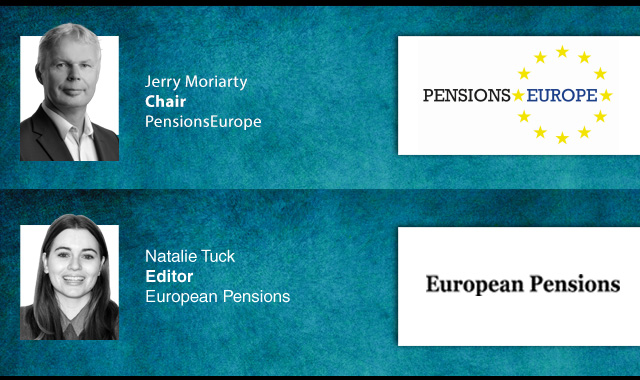
In the latest European Pensions podcast, Natalie Tuck talks to PensionsEurope chair, Jerry Moriarty, about his new role and the European pension policy agenda
Podcast: The benefits of private equity in pension fund portfolios

The outbreak of the Covid-19 pandemic, in which stock markets have seen increased volatility, combined with global low interest rates has led to alternative asset classes rising in popularity. Private equity is one of the top runners in this category, and for good reason.
In this podcast, Munich Private Equity Partners Managing Director, Christopher Bär, chats to European Pensions Editor, Natalie Tuck, about the benefits private equity investments can bring to pension fund portfolios and the best approach to take.
In this podcast, Munich Private Equity Partners Managing Director, Christopher Bär, chats to European Pensions Editor, Natalie Tuck, about the benefits private equity investments can bring to pension fund portfolios and the best approach to take.
Mitigating risk
BNP Paribas Asset Management’s head of pension solutions, Julien Halfon, discusses equity hedging with Laura Blows

© 2019 Perspective Publishing Privacy & Cookies
Recent Stories