The new Dutch pension agreement has become so complicated that it’s impossible to communicate to members, Towers Watson said.
In New elan or blind wall? The pension agreement in perspective the consultancy’s pension specialists said that none of the agreements represent the revival the Dutch pension system so desperately needs.
“We believe that the pension agreement could have been much simpler, should have been more effective, and could have been formed much earlier,” said Retirement Solutions Leader at Towers Watson Bart den Hartog. He added that the social partners should have focused on the main subjects, namely that rising life expectancy should not automatically lead to rising pension costs, and that volatility of the financial markets cannot reflect on company balance sheets.
“If employers and employees conclude that the current pension promises can no longer be met at current contribution levels, then there are two conclusions possible: the pension level has to come down, or contribution levels have to go up. What is so complicated about that?”
Towers Watson said that the new agreement discusses different varieties in detail, which will most likely result in an extremely complex and hardly explicable system, despite the fact that good communication about pensions is thought to be just as important as the pension itself.
The consultancy asked how a member can understand their pension if they needs to merge his old and new pension benefits, or when he hears about ‘soft’ pension benefits or “almost incomprehensible” value transfers between generations.
Den Hartog said the discussion should not be about details, but about the main issues, such as the plunging markets and long-term interest rate, and a possible collapse of the euro.
Earlier Towers Watson research into employee engagement showed that two thirds of employees at international companies assumes to have to work until past age 65, while half of workers expect to have to take care of their own retirement provision and 40 per cent mainly expects their employer to explain their employment contract and which independence is expected of them.
Den Hartog concluded: “Maybe the new élan should start with the fundamental question of which part of his income an employee wants to reserve for his retirement, and maybe all too drastic changes to the system should be postponed as long as that question hasn’t been answered properly.”



Latest News
-
Pension schemes face duty to embrace AI within strict safeguards, expert says
-
EIOPA highlights pension policy work in 2025 annual report
-
Czech govt's proposed fee cuts will not cover costs and lead to ‘market paralysis’ - APS ČR
-
Finland’s pension reform strengthens financing outlook; uncertainty grows over TyEL contributions
-
Greek occupational pension fund assets reach €2,859m at the end of Q1 – Bank of Greece
-
Irish Pensions Awards 2026: Deadline extended




Podcast: Stepping up to the challenge
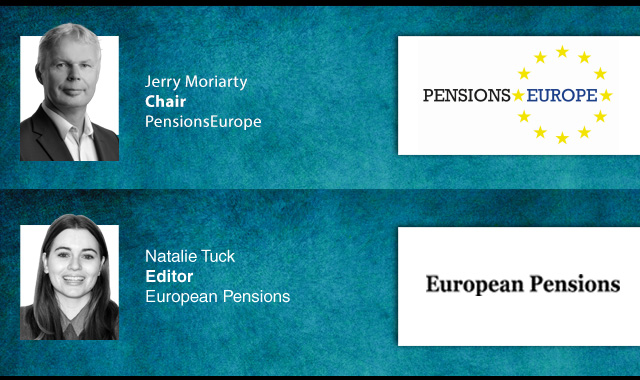
In the latest European Pensions podcast, Natalie Tuck talks to PensionsEurope chair, Jerry Moriarty, about his new role and the European pension policy agenda
Podcast: The benefits of private equity in pension fund portfolios

The outbreak of the Covid-19 pandemic, in which stock markets have seen increased volatility, combined with global low interest rates has led to alternative asset classes rising in popularity. Private equity is one of the top runners in this category, and for good reason.
In this podcast, Munich Private Equity Partners Managing Director, Christopher Bär, chats to European Pensions Editor, Natalie Tuck, about the benefits private equity investments can bring to pension fund portfolios and the best approach to take.
In this podcast, Munich Private Equity Partners Managing Director, Christopher Bär, chats to European Pensions Editor, Natalie Tuck, about the benefits private equity investments can bring to pension fund portfolios and the best approach to take.
Mitigating risk
BNP Paribas Asset Management’s head of pension solutions, Julien Halfon, discusses equity hedging with Laura Blows

© 2019 Perspective Publishing Privacy & Cookies
Recent Stories