The Dutch government has given pension funds extra possibilities to prevent huge pension cuts and to improve future sustainability of pension arrangements. The pension package presented will help funds to “improve their financial position responsibly and quicker than anticipated”.
The effects of the announced package are not favourably or unfavourably biased towards one generation and the macro-economic effects are positive, the government said.
Under the new measures, contributions will not have to rise unnecessarily and, under strict conditions, pension funds will be able to spread out pension cuts over several years and cap them at a maximum of 7 per cent per annum.
In a letter to parliament, State Secretary of Social Affairs Paul de Krom wrote: “The package will mean that benefit cuts in 2013 can be restricted to what has been announced earlier this year.”
Dutch regulator De Nederlandsche Bank (DNB) will adjust the discount rate for pension funds. From 30 September 2012, pension funds’ long-term liabilities will be calculated by using an ultimate forward rate, which will make the interest rate less volatile.
Furthermore, funds in underfunding will get a one-off possibility to deviate from the requirement that pension contributions need to contribute to recovery. Pension funds which do not meet the requirements for this option can request DNB for customisation.
Schemes which would like to use the possibility to spread out pension cuts and/or request customisation, will have to adjust their pension arrangement on three points to ensure more robustness and to already bring it in line with the upcoming rise in pension age and further life expectancy increases.
Those schemes will have to increase the target age for pension accrual from 65 to 67 years in 2013, rather than in 2014; existing pension benefits already need to include a further increase of life expectancy; and pension funds who can now increase benefits if their coverage ratio exceeds 105 percent will from next year onwards only be allowed to give indexation with a coverage ratio above 110 per cent.
De Krom added that the government can help out pension funds, but that the solution for their structural financial problems cannot be expected from the government, as it is the responsibility of the social partners and pension funds themselves.
“It is important that pension funds and social partners take responsibility for solving the financial problems. The current pensions and pension promises are underfunded due to the constant increase of life expectancy and the persistent low interest rate. For many underfunded funds, the recovery has stagnated or disappeared in 2012. The government cannot solve these problems. Most funds will have to eliminate their underfunding by the end of 2013, also to maintain public confidence in the pension system. Cuts are therefore inevitable. But it is essential to prevent cutting more than is necessary.”
The Dutch Pension Federation has welcomed the pensions package but also spoke of missed opportunities. It called for a “fundamental discussion about which discount rate is suitable as a credible indicator for the current financial situation of pension funds”.



Latest News
-
PensionsEurope calls for 'report once' principle in response to EIOPA consultation
-
German reforms represent ‘paradigm shift’ for pension investment
-
French pension system deficit estimated at €5.1bn in 2025
-
German pension funds call for greater legal certainty and reduced bureaucracy
-
Sampension to hold extraordinary meeting to elect chairperson and board member
-
Finnish pension reforms to come into force from 1 July




Podcast: Stepping up to the challenge
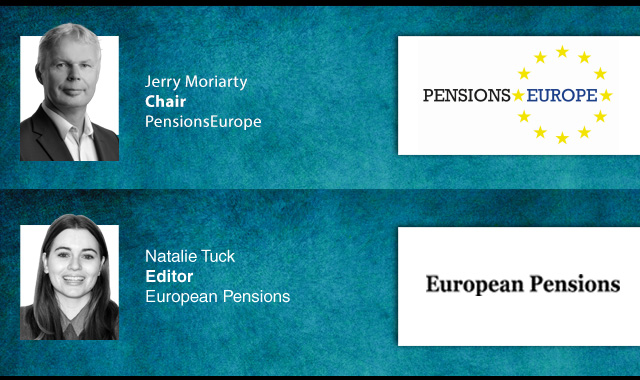
In the latest European Pensions podcast, Natalie Tuck talks to PensionsEurope chair, Jerry Moriarty, about his new role and the European pension policy agenda
Podcast: The benefits of private equity in pension fund portfolios

The outbreak of the Covid-19 pandemic, in which stock markets have seen increased volatility, combined with global low interest rates has led to alternative asset classes rising in popularity. Private equity is one of the top runners in this category, and for good reason.
In this podcast, Munich Private Equity Partners Managing Director, Christopher Bär, chats to European Pensions Editor, Natalie Tuck, about the benefits private equity investments can bring to pension fund portfolios and the best approach to take.
In this podcast, Munich Private Equity Partners Managing Director, Christopher Bär, chats to European Pensions Editor, Natalie Tuck, about the benefits private equity investments can bring to pension fund portfolios and the best approach to take.
Mitigating risk
BNP Paribas Asset Management’s head of pension solutions, Julien Halfon, discusses equity hedging with Laura Blows

© 2019 Perspective Publishing Privacy & Cookies
Recent Stories