Eurozone GDP growth will fall from 1.7% to 1.0% due to a combination of fiscal austerity, a lingering debt crisis and a slowdown in external demand, ING Investment Management said.
Head of strategy at ING IM Valentijn van Nieuwenhuijzen explained: “As a whole, the global economy is currently slowing down again. This is most evident in those developed market economies characterised by household and financial sector deleveraging. Nevertheless, core Europe as well as emerging markets are affected as well through a slowing of external demand. There are two broad reasons behind this. First, the oil and Japan disaster shocks have taken a greater toll on developed markets’ domestic demand growth than previously anticipated.
“Second, there are increasing concerns about the competency of policymakers on both sides of the Atlantic to deal with the challenges facing them. In the US this has raised the prospect of more near-term fiscal tightening without a solution for the long-term fiscal problems, while in Europe it implies a heightened degree of systemic risk.”
Risk aversion has risen considerably lately, potentially resulting in a self-fulfilling negative feedback loop between growth on the one hand and financial conditions and confidence on the other.
Elsewhere, emerging markets are predicted to continue to outpace their developed counterparts with emerging market GDP growth expected at 6.1% in 2012, compared to a world average of 3.6% and a developed market average of 1.6%. The asset manager expects Chinese growth to drop from 9.2% in 2011 to 8.5% in 2012.



Latest News
-
DC now ‘dominating’ FTSE 350 companies’ pension spending as employer contributions fall
-
Italian supplementary pension coverage climbs to 40%; gender gap remains
-
Sampension joins investor call to protect EU carbon trading scheme
-
PFA welcomes SpaceX IPO as Danish pension funds split on company
-
AZL surpasses 800,000 Wtp participants after completing first pension transitions
-
UK's Smart Pension surpasses £10bn AUM




Podcast: Stepping up to the challenge
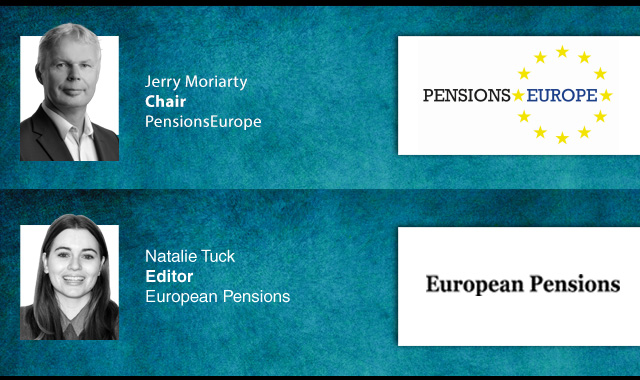
In the latest European Pensions podcast, Natalie Tuck talks to PensionsEurope chair, Jerry Moriarty, about his new role and the European pension policy agenda
Podcast: The benefits of private equity in pension fund portfolios

The outbreak of the Covid-19 pandemic, in which stock markets have seen increased volatility, combined with global low interest rates has led to alternative asset classes rising in popularity. Private equity is one of the top runners in this category, and for good reason.
In this podcast, Munich Private Equity Partners Managing Director, Christopher Bär, chats to European Pensions Editor, Natalie Tuck, about the benefits private equity investments can bring to pension fund portfolios and the best approach to take.
In this podcast, Munich Private Equity Partners Managing Director, Christopher Bär, chats to European Pensions Editor, Natalie Tuck, about the benefits private equity investments can bring to pension fund portfolios and the best approach to take.
Mitigating risk
BNP Paribas Asset Management’s head of pension solutions, Julien Halfon, discusses equity hedging with Laura Blows

© 2019 Perspective Publishing Privacy & Cookies
Recent Stories