Europe is still negotiating to find a solution to the European sovereign debt crisis, but this will inevitably end in a messy compromise that fails to resolve the peripheral solvency crisis and merely prolongs the agony until the next stage, said Stuart Thomson, chief economist at Ignis Asset Management.
Thomson pointed out that Portugal is refusing to seek funding from the European Financial Stability Fund, although this is unsustainable for a low growth economy. He believes Portugal is waiting until Ireland and Greece negotiate easier debt terms before seeking assistance.
He said: “The EU is seeking to extend Greece's three year loan to seven years in line with the tenure of the Irish loan. This extension is likely to be provided at the same 5% loan paving the way for the authorities to reduce the penal rate of interest on Irish borrowing from 5.8% to 5.0%. This will be welcome debt relief, but it is not a game changer and does not prevent eventual restructuring. A 1% reduction in Ireland's cost of debt will reduce annual interest for the government by the equivalent of 0.4% of GDP.
"This is not enough for an economy where nominal GDP growth will struggle to reach 1% during 2011. An increase in the EFSF to its full €440bn intended size and easing of Greek and Irish debt terms to pave the way for Portuguese membership of this stigmatised club. It is the least that international investors can expect this month.”
He added that, with Spanish seven year government debt yielding 5.007%, it is unreasonable to expect Spain to subsidise loans to peripheral economies when it has its own banking problems. However, Ignis Asset Management believes that Spain is different to Ireland, Greece and Portugal.
He said: “In our opinion, it is not technically insolvent and shouldn't face eventual debt restructuring. However, if the banking stress tests in June are accurate then the true cost of refinancing the Cajas will lead to an unacceptable increase in Spain's funding costs and in these circumstances it would be appropriate to seek temporary funding from the EFSF. This effectively turns it into a European-style TARP for recapitalising banks.
"However, the Spanish government believes that the cost of recapitalisation will be a mere €20 billion, a figure that is scarcely believable by the financial markets and there is a clear danger that the regulators produce another unsatisfactory outcome.”
There are two circumstances under which Ignis believes that overweight positions in the periphery would be appropriate. Thomson explained: “First, if European leaders decide to allow the EFSF to buy peripheral government debt in the secondary market helping to drive down funding costs to the new 5% seven year lending rate. However, German politicians have explicitly rejected this proposal.
"There is a second best alternative, which Angela Merkel is believed to favour, which is to allow peripheral nations to borrow from the EFSF and buy their own bonds back. This is a second best solution and presents a prisoner's dilemma for governments. If they bid up their debt prices the effective reduction in the debt burden will be minimal and it is therefore in their interest to retire this debt at the lowest possible cost. This would bring them in conflict with the banks, most of whom still measure their peripheral government debt at par in their balance sheets.
“The second reason for selective overweight positions in peripheral debt would be if Spain seeks support from the EFSF to recapitalise its banks because this would spread out the recapitalisation costs over several years and enable existing yields to fall by a material amount. This remains a low probability event given recent government statements.
“The nuclear option alluded to by the film reference comes from the five stage grieving process for Ireland's Celtic Tiger economy. The government and electorate have gone through the denial and anger stages and are about to enter the bargaining phase. Bargaining phases in grief are rarely successful, but we do not expect the government to risk the nuclear option of senior debt restructuring until the next phase of depression. This will occur when slower global demand constrains the core.”
Olly Russ, manager of the Ignis Argonaut European Income Fund and Enhanced Income Fund, said that the problem of the debt crisis in the EU is twofold: one of liquidity in the first instance, and solvency in the second.
But unlike the US and Japan, Greece, Ireland, Portugal and potentially Spain cannot print money to cover the problem of very high current deficits, and in the first three cases, large piles of debt.
One of the options would be to go into default, but Russ highlighted that this might have drastic consequences. “There has not been a default in Western Europe since 1947, and such is the interlinked nature of the European banking systems that such an event could make Lehmans look like a tea party. A 30% default by the PIGS would destroy the banking system of Western Europe, including that of Germany. In a default situation, access to capital would be severely restricted. Advanced nations have far too much at stake to risk a default except in extremis, as opposed to emerging markets where financial leverage and the banking sector are smaller. Default within the Euro would raise financing costs but not lead to devaluation – the pain without the gain.”
A second option would be to leave the Euro, but this is not a realistic solution, as debt would still be denominated in euros, and devaluation would mean it would soar in real value overnight. “A 30% devaluation of say New Drachma would bankrupt Greece in a day. And who, if not the ECB, would then lend them money?” Russ said.
Another issue is that the problem in each state is different and that many factors play a role as to whether debt levels are sustainable, like the overall level of debt, the interest paid, the debt trajectory, demographics, and the public/ private balance. Russ: “There is an element of mutual dependency – were one government to default, the market would assume all troubled states will, radically repricing the bond market downwards for most nations.”
The EU governments have set themselves a deadline of 24-25 March to reach some kind of solution.
Russ said: “So far, the EU has wandered about chucking buckets of cash over the fires, in the hope the situation stabilises. Now a more long-term solution is needed, before the market goes critical. The strong performance of financial stocks year to date is to some degree predicated on this.
“As the crisis grows ever closer to Brussels, eventually the EU would have to act. The consequences of not acting means the complete break up of the Eurozone, the EU banking system and whole EU project. As vested interests go, that’s a biggie.
“If on the other hand they positively surprise – stranger things have happened, although you would have to go back to the spontaneous combustion of the Mayor of Warsaw in 1483 – then markets, especially peripheral financials will rip.
“Either way, it’s worth waiting for the outcome, but they will ultimately find a solution – the result of not doing so is too horrific to contemplate.”



Latest News
-
Pension schemes face duty to embrace AI within strict safeguards, expert says
-
EIOPA highlights pension policy work in 2025 annual report
-
Czech govt's proposed fee cuts will not cover costs and lead to ‘market paralysis’ - APS ČR
-
Finland’s pension reform strengthens financing outlook; uncertainty grows over TyEL contributions
-
Greek occupational pension fund assets reach €2,859m at the end of Q1 – Bank of Greece
-
Irish Pensions Awards 2026: Deadline extended




Podcast: Stepping up to the challenge
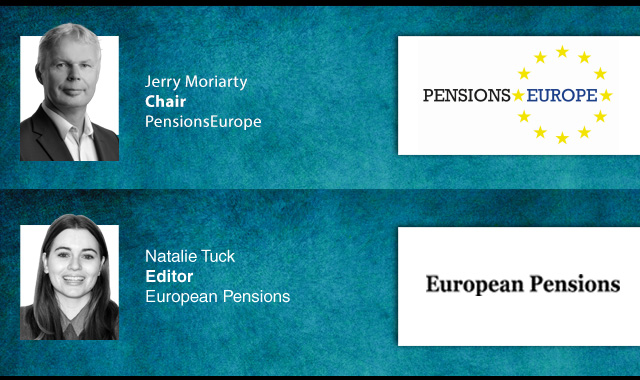
In the latest European Pensions podcast, Natalie Tuck talks to PensionsEurope chair, Jerry Moriarty, about his new role and the European pension policy agenda
Podcast: The benefits of private equity in pension fund portfolios

The outbreak of the Covid-19 pandemic, in which stock markets have seen increased volatility, combined with global low interest rates has led to alternative asset classes rising in popularity. Private equity is one of the top runners in this category, and for good reason.
In this podcast, Munich Private Equity Partners Managing Director, Christopher Bär, chats to European Pensions Editor, Natalie Tuck, about the benefits private equity investments can bring to pension fund portfolios and the best approach to take.
In this podcast, Munich Private Equity Partners Managing Director, Christopher Bär, chats to European Pensions Editor, Natalie Tuck, about the benefits private equity investments can bring to pension fund portfolios and the best approach to take.
Mitigating risk
BNP Paribas Asset Management’s head of pension solutions, Julien Halfon, discusses equity hedging with Laura Blows

© 2019 Perspective Publishing Privacy & Cookies
Recent Stories