The implementation of a Financial Transactions Tax (FTT) levied across the European Union could increase transaction costs by up to 18 times in the foreign exchange (FX) markets according to a report from Oliver Wyman.
The report entitled Proposed EU Commission Financial Transaction Tax; Impact Analysis of Foreign Exchange Markets, found that the FTT which would take effect from 1 January 2014 could also reduce market liquidity and increase indirect transaction costs by up to a further 110 per cent. Furthermore, pension funds, asset managers and insurers would also be hit as both direct and indirect costs would largely be passed onto the end-users.
To demonstrate the increase in transaction costs, Oliver Wyman cited an example using the EUR/USD 1 week swap with a notional value of €25,000,000, as transacted between a bank and a financial institution. The current cost to transact for the end-user is €279. The additional taxation of this transaction at 0.01 per cent is €2,500 to the dealer and an additional €2,500 to the financial institution, resulting in a total cost of €5,279 or an 18-fold increase.
The Global Financial Markets Association (GFMA) Global FX Division’s managing director James Kemp said: “The foreign exchange industry is an essential part of a stable and sustainable economy, underpinning international trade and investing.
"This study shows that the proposed tax would in effect penalise Europe’s business for sensible risk management – by using FX products to manage currency fluctuations – and also threaten to impose further costs on the investment returns of pension funds and asset managers.”



Latest News
-
Finnish pension reforms to come into force from 1 July
-
Icelandic pension funds Gildi and Festa begin merger talks
-
Germany's DAI calls for wider use of equities in German pensions
-
Finnish earnings-related pension providers' solvency ratio falls to 129.5%
-
The Netherlands’ Hoogovens Pension Fund returns 2.7% in 2025
-
Dutch pension fund Haskoning selects Van Lanschot Kempen as fiduciary manager




Podcast: Stepping up to the challenge
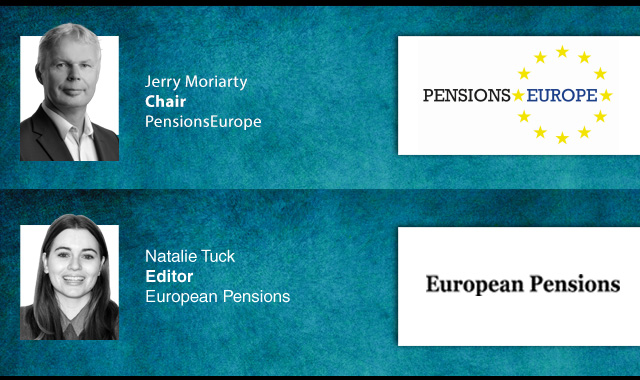
In the latest European Pensions podcast, Natalie Tuck talks to PensionsEurope chair, Jerry Moriarty, about his new role and the European pension policy agenda
Podcast: The benefits of private equity in pension fund portfolios

The outbreak of the Covid-19 pandemic, in which stock markets have seen increased volatility, combined with global low interest rates has led to alternative asset classes rising in popularity. Private equity is one of the top runners in this category, and for good reason.
In this podcast, Munich Private Equity Partners Managing Director, Christopher Bär, chats to European Pensions Editor, Natalie Tuck, about the benefits private equity investments can bring to pension fund portfolios and the best approach to take.
In this podcast, Munich Private Equity Partners Managing Director, Christopher Bär, chats to European Pensions Editor, Natalie Tuck, about the benefits private equity investments can bring to pension fund portfolios and the best approach to take.
Mitigating risk
BNP Paribas Asset Management’s head of pension solutions, Julien Halfon, discusses equity hedging with Laura Blows

© 2019 Perspective Publishing Privacy & Cookies
Recent Stories