The Eurozone debt deal agreed today to help prevent the global economy from plunging into a severe and long lasting recession has sparked mixed reaction among leading European economists.
The deal which includes the expansion of the European Financial Stability Facility from €440 billion to €1trillion has been acknowledged by experts as being necessary but they have also highlighted that a number of key issues remain unanswered.
Threadneedle chief investment officer Mark Burgess said: “It appears that the European politicians have finally done enough to contain Greece for now. Given the large numbers of negotiating parties, the scale of the agreement is considerable and should be applauded and has done enough to take the possibility of financial meltdown in Europe off the table. Haircuts will be taken, and banks will be recapitalised and breathing space has been bought.
“What has not changed however is that the outlook for developed market growth is as challenged as ever. Europe will struggle to avoid recession next year, and the US will grow at less than 2%.”
Whilst recognising that “breathing space has been achieved” as a result of the deal, Burgess added that the crisis has clearly demonstrated that structural flaws remain within Europe. “How does the system work without fiscal and political integration? Achieving this is going to be very difficult, and I would think will ultimately lead to a smaller Eurozone than today. For Greece, even with the 50% haircut, they are still forecast to have net debt to GDP of 120% by 2020, not exactly sound finances.”
Cheviot Asset Management partner David Miller agreed that whilst “the train is back on the tracks” people should not expect “a smooth ride just yet.”
“It is good to see progress, but we are still a fair way off a sound resolution. The involvement of the International Monetary Fund (IMF) and potentially the Chinese will reassure investors. Real money will be needed to resolve the debt problem; the question now is where this is going to come from. Until then, the sentiment will remain fragile.”
Schroders European economist Azad Zangana shared the view that the volatility within the financial markets may have been temporarily resolved, much of the damage may have already been done.
“We expect the eurozone economy to slow significantly by the end of the year, though the deal done may have helped avoid a second global credit crunch and a very deep recession,” he commented.
He also highlighted that several other details are missing from the agreement such as whether the IMF will provide additional funding to the deal and if the funding cost of the EFSF rises will the EU pass this increased cost to the bailed out governments.
Other figures have underlined that the ‘three-pronged agreement’ has just bought the euro-zone more time before the next round of measures need to be drawn up to prevent the crisis from escalating further.
Aberdeen Asset Management head of global strategy and asset allocation Mike Turner added: “One thing that European politicians and policy makers have excelled at since the 2008 financial crisis is buying themselves more time. Whether it was the large scale, but temporary provision implemented in the immediate aftermath or the policy measures agreed last night in Brussels, Europeans seem intent on limiting the capital commitments they make for an issue of solvency and not liquidity.”



Latest News
-
Swedish court continuing to review Indecap’s dispute with FTN
-
PFA welcomes SpaceX IPO as Danish pension funds split on company
-
UK's Smart Pension surpasses £10bn AUM
-
Swedish occupational pension assets increase by SEK13bn in Q1
-
UK DB funding surplus rises by £5.3bn in May
-
Pensions sector among least affected by major ICT incidents in 2025 – ESAs




Podcast: Stepping up to the challenge
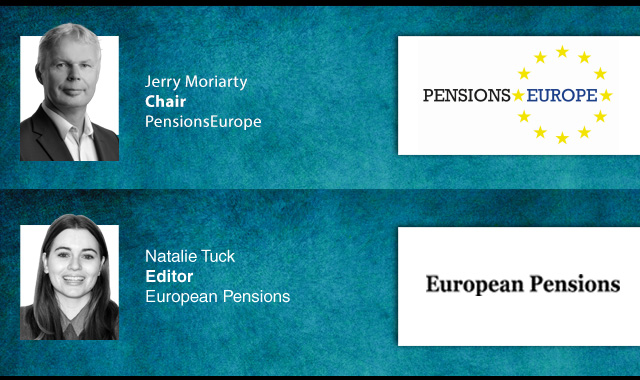
In the latest European Pensions podcast, Natalie Tuck talks to PensionsEurope chair, Jerry Moriarty, about his new role and the European pension policy agenda
Podcast: The benefits of private equity in pension fund portfolios

The outbreak of the Covid-19 pandemic, in which stock markets have seen increased volatility, combined with global low interest rates has led to alternative asset classes rising in popularity. Private equity is one of the top runners in this category, and for good reason.
In this podcast, Munich Private Equity Partners Managing Director, Christopher Bär, chats to European Pensions Editor, Natalie Tuck, about the benefits private equity investments can bring to pension fund portfolios and the best approach to take.
In this podcast, Munich Private Equity Partners Managing Director, Christopher Bär, chats to European Pensions Editor, Natalie Tuck, about the benefits private equity investments can bring to pension fund portfolios and the best approach to take.
Mitigating risk
BNP Paribas Asset Management’s head of pension solutions, Julien Halfon, discusses equity hedging with Laura Blows

© 2019 Perspective Publishing Privacy & Cookies
Recent Stories