An EU proposal for the public disclosure of the net short positions of individual managers risks distorting financial markets and is not effective in meeting the needs of investors seeking efficient risk management, an independent study by international management consulting firm Oliver Wyman has found.
The study comes as European lawmakers continue to consider changes to the European Commission’s draft short-selling regulations, which proposes public disclosure of individual managers’ net short positions above 0.5% of outstanding share capital.
Under the existing timetable, a vote by the European Parliament’s Economic and Monetary Affairs Committee on possible amendments to the Commission’s original draft regulations could take place on 14 February 2011.
The report found that a regulatory regime based on the disclosure of individual managers’ net short positions above a threshold of 0.5% of outstanding share capital “is not effective in meeting the needs of the public, regulators or industry participants”.
It found evidence that such disclosure requirements result in, among other things, lower market liquidity, and an increased likelihood of short squeezes. Overall, the benefits of these disclosure requirements seem negligible in comparison with the increases in the cost of capital and the associated negative impact on the real economy, it claimed.
The Oliver Wyman report was commissioned by the Alternative Investment Management Association (AIMA) and sponsored by Deutsche Bank. It analysed the impact of a public disclosure requirement for short selling on trading activity in equity markets and updated the findings from a 2010 Oliver Wyman report.
Andrew Baker CEO of AIMA commented: “The hedge fund industry supports increasing market transparency through the publication of aggregated short positions. We also support reporting of positions to national regulators. But as the findings of this independent study highlight, there are serious unintended consequences of disclosing individual managers’ positions to the market – including a decrease in liquidity, lower returns for end investors including retail investors, and the likelihood that investments will move to other jurisdictions where returns are not constrained by inappropriate regulations,”



Latest News
-
DC now ‘dominating’ FTSE 350 companies’ pension spending as employer contributions fall
-
Sampension joins investor call to protect EU carbon trading scheme
-
PFA welcomes SpaceX IPO as Danish pension funds split on company
-
UK's Smart Pension surpasses £10bn AUM
-
Swedish occupational pension assets increase by SEK13bn in Q1
-
Swedish court continuing to review Indecap’s dispute with FTN




Podcast: Stepping up to the challenge
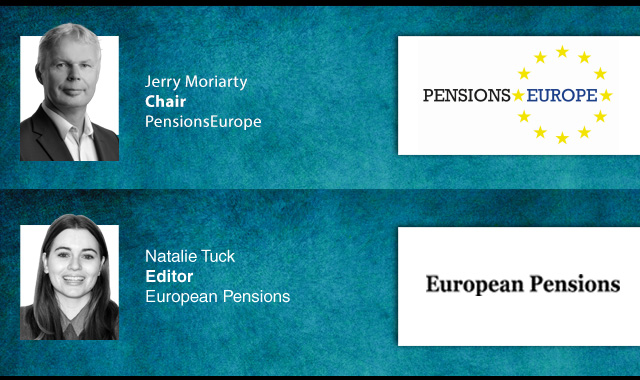
In the latest European Pensions podcast, Natalie Tuck talks to PensionsEurope chair, Jerry Moriarty, about his new role and the European pension policy agenda
Podcast: The benefits of private equity in pension fund portfolios

The outbreak of the Covid-19 pandemic, in which stock markets have seen increased volatility, combined with global low interest rates has led to alternative asset classes rising in popularity. Private equity is one of the top runners in this category, and for good reason.
In this podcast, Munich Private Equity Partners Managing Director, Christopher Bär, chats to European Pensions Editor, Natalie Tuck, about the benefits private equity investments can bring to pension fund portfolios and the best approach to take.
In this podcast, Munich Private Equity Partners Managing Director, Christopher Bär, chats to European Pensions Editor, Natalie Tuck, about the benefits private equity investments can bring to pension fund portfolios and the best approach to take.
Mitigating risk
BNP Paribas Asset Management’s head of pension solutions, Julien Halfon, discusses equity hedging with Laura Blows

© 2019 Perspective Publishing Privacy & Cookies
Recent Stories