Firm measures are necessary to bring scheme funding levels of Dutch pension funds up to the minimum required funding ratio of 105 per cent within five years, warns De Nederlandsche Bank (DNB) in its Annual Report 2008.
DNB, which is responsible for safeguarding financial stability in the Netherlands, said the funding level at the end of 2008, which stood at 95 per cent, can be brought up by the cancellation of indexation is one of the necessary measures. The report said that after the funding ratio is brought up, the pension sector will then have to work on redressing the reserve shortfall, aiming to ensure all funds return to the 125-130 per cent level again within a maximum of ten years. However, DNB was keen to reassure that the Dutch pension sector remains one of the most robust in the world, and its assessment framework has prevented further exposure to the crisis.
Dutch pension funds, DNB added, are subject to tighter accountancy rules, which, in addition to an ageing population and further regulation, are putting increasing pressure on them. These circumstances, it said, means employees are subject to more risk than before, and will be increasingly exposed in the future. The body also warned that growing pressure to enhance efficiency will end result in the 'further professionalisation and clustering of pension funds'. Overall, the landscape is likely to change over the coming years.
In an effort to begin to address these issues, mid-2008 saw the Cabinet request the Bakker commission to draw up an advisory report on expanding labour participation. Three conclusions were reached with advised implementation over the short, medium and long-term, with the latter proposing that the state pension and retirement age be raised to encourage employment into later years. The commission also proposed funding a greater part of pensions from general tax revenues.
However, DNB expressed concern at the outsourcing trend prevalent in Dutch pension funds. 'Pension fund directors thus have put themselves at an increasing distance from actual pension management, and have correspondingly less control over the quality, continuity and integrity of their schemes.' It added that the Pension Act, introduced on 1 January 2007, means DNB has lost the power to examine a subcontractor without the interposition of the pension fund, and can only o so if there is no other way to determine that the fund is complying with all statutory and regulatory provisions concerning its outsourcing activities. DNB warned that these developments 'imply that its direct view of a fund's risks has been impaired and that necessary intervention on its part, if required, will be less swift and less effective than before.'
The report also addressed the impending Solvency II requirements, due for implementation in 2012. The report says: 'The credit crisis has made it abundantly clear that such an approach is important for the adequate charting of insurers' risk exposure.'



Latest News
-
Swedish court continuing to review Indecap’s dispute with FTN
-
PFA welcomes SpaceX IPO as Danish pension funds split on company
-
UK's Smart Pension surpasses £10bn AUM
-
Swedish occupational pension assets increase by SEK13bn in Q1
-
UK DB funding surplus rises by £5.3bn in May
-
Pensions sector among least affected by major ICT incidents in 2025 – ESAs




Podcast: Stepping up to the challenge
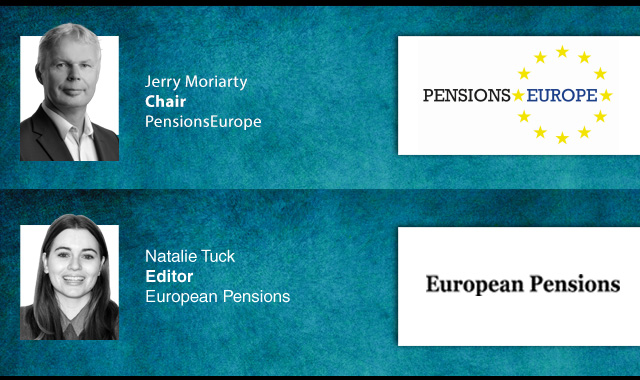
In the latest European Pensions podcast, Natalie Tuck talks to PensionsEurope chair, Jerry Moriarty, about his new role and the European pension policy agenda
Podcast: The benefits of private equity in pension fund portfolios

The outbreak of the Covid-19 pandemic, in which stock markets have seen increased volatility, combined with global low interest rates has led to alternative asset classes rising in popularity. Private equity is one of the top runners in this category, and for good reason.
In this podcast, Munich Private Equity Partners Managing Director, Christopher Bär, chats to European Pensions Editor, Natalie Tuck, about the benefits private equity investments can bring to pension fund portfolios and the best approach to take.
In this podcast, Munich Private Equity Partners Managing Director, Christopher Bär, chats to European Pensions Editor, Natalie Tuck, about the benefits private equity investments can bring to pension fund portfolios and the best approach to take.
Mitigating risk
BNP Paribas Asset Management’s head of pension solutions, Julien Halfon, discusses equity hedging with Laura Blows

© 2019 Perspective Publishing Privacy & Cookies
Recent Stories