Commodities are under-represented in most pension portfolios, according to Colin O’ Shea and Jason Lejonvarn of Hermes. They argue that pension funds should invest more in commodities as they give equity-like returns, improve portfolio diversification and are attractively priced right now.
Although many believe that commodities have underperformed for decades, they have actually outperformed equities by about 5 per cent per annum over the past ten years and have matched equity returns over the past 40 years. At the moment, commodities are also attractively priced. There is also an increased demand building over the longer-term, with emerging markets making up a fair part of this. For instance, over 40 per cent of global metals demand comes from China.
Colin O’ Shea, head of commodities at Hermes, said: “Price is one reason to invest in this asset class, the other is diversification. Commodities are negatively correlated to other asset classes. In a portfolio with more commodities but less equities they’ll have the same expected returns, and may be better, but reduce overall portfolio risk.”
In addition, commodities respond differently to events than other asset classes do. Food price spikes are positive for commodities but can be negative to equities, for instance. They also protect against weather-related risks, such as hurricanes and wars. These are negative for equities and companies in general, but positive for commodities.
Some of the commodities that are attractively priced now are crude oil, corn and copper. Jason Lejonvarn, head of strategy, commodities at Hermes, commented: “The purity of the ore and copper has gone down substantially and really the only future prospective places to mine copper are in very politically unstable regions, i.e. central Africa. So, in cases of copper and crude oil exploration is going offshore and that has become very expensive. And obviously with the spill in the Gulf, the regulatory constraints have increased. So for some of the key commodities, you’re looking at constrained supply and deficits over the next couple of years.”
When it comes to the allocation of assets to commodities, there are big differences among the European countries. The greatest take-up for commodities can be found in the Germanic countries, such as Germany, Switzerland, the Nordics and the Netherlands. The UK, Southern Europe and Eastern Europe have not been so keen.
Lejonvarn added: “There’s quite a bit of activity in Austria and Germany, where they are trying to address the under representation and the desire to get more alternatives in their portfolio. We’ve seen the same in the Nordics. In other countries, particularly in the UK, there hasn’t been as much activity as you would anticipate. A lot of consultants talk about alternatives, de-risking the schemes and lower correlations in their portfolio, and commodities meet those criteria. Yet it is underrepresented, particularly in UK pension schemes. But we haven’t really seen the activity to address that.”



Latest News
-
Pension schemes face duty to embrace AI within strict safeguards, expert says
-
EIOPA highlights pension policy work in 2025 annual report
-
Czech govt's proposed fee cuts will not cover costs and lead to ‘market paralysis’ - APS ČR
-
Finland’s pension reform strengthens financing outlook; uncertainty grows over TyEL contributions
-
Greek occupational pension fund assets reach €2,859m at the end of Q1 – Bank of Greece
-
Irish Pensions Awards 2026: Deadline extended




Podcast: Stepping up to the challenge
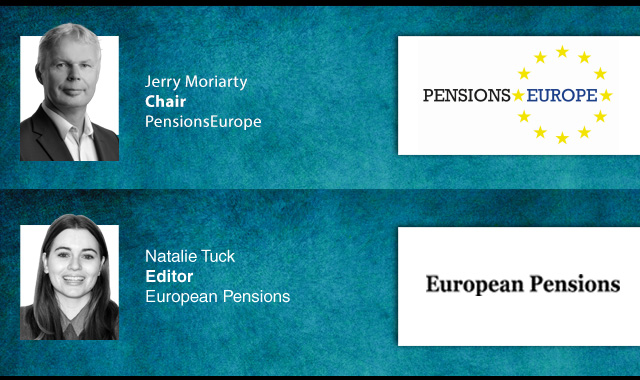
In the latest European Pensions podcast, Natalie Tuck talks to PensionsEurope chair, Jerry Moriarty, about his new role and the European pension policy agenda
Podcast: The benefits of private equity in pension fund portfolios

The outbreak of the Covid-19 pandemic, in which stock markets have seen increased volatility, combined with global low interest rates has led to alternative asset classes rising in popularity. Private equity is one of the top runners in this category, and for good reason.
In this podcast, Munich Private Equity Partners Managing Director, Christopher Bär, chats to European Pensions Editor, Natalie Tuck, about the benefits private equity investments can bring to pension fund portfolios and the best approach to take.
In this podcast, Munich Private Equity Partners Managing Director, Christopher Bär, chats to European Pensions Editor, Natalie Tuck, about the benefits private equity investments can bring to pension fund portfolios and the best approach to take.
Mitigating risk
BNP Paribas Asset Management’s head of pension solutions, Julien Halfon, discusses equity hedging with Laura Blows

© 2019 Perspective Publishing Privacy & Cookies
Recent Stories