European men received 39 per cent higher pensions than women in 2009, according to a European Commission study of pension gaps in Europe.
The Gender Gap in Pensions in the EU found that unlike the gender pay gap, the pension gap is only just emerging as an issue. Data on the gap was sparse, and the research encountered “overwhelming complexity” in assessing the matter.
EU countries are called upon to place the issue on the agenda, and work on policy initiatives that can address and prevent the problem.
The study revealed that the average pension gap was more than twice the value of the gender pay gap, but there was “no simple relationship” between the figures.
“The fear is that individuals accustomed to economic independence in their daily affairs might be confronted, once they enter pensionable age, with systems built around the presumption that dependence is the ‘normal’ situation. What had been gained in the labour market may be reversed in pensions,” the report said.
Luxembourg and Germany had the widest gaps, at 47 per cent and 44 per cent, respectively. Estonia and the Slovak Republic were at the other end of the scale, with gaps of 4 per cent and 8 per cent.
There was no clear correlation between the gender pay gap and the pension gap, the report said, and Estonia actually had the highest pay gap in the EU.
It was also unclear whether the pensions gap was tending to rise or fall.
In countries with second-pillar systems the gender gap was wider when looking at the overall pension, rather than the public pension component on its own.
“The second pillar in those countries also displays very significant coverage gaps, as fewer women choose to enrol in occupational pension plans,” the report said.
Current pensioners are impacted by labour market inequalities in the past, the report said, while new reforms could increase the risk of the pension gap growing in future.
The switch in emphasis from public to private pension provision tends to tighten the link between contributions and benefits, the report said, and could therefore have a disproportionate effect on women.
“As the EU has taken a lead on both ageing populations and gender balance, it is appropriate that it devotes attention to possible side effects of their interaction,” the report said. “A decisive step in that direction would be to produce a gender gap indicator for pensions on a regular basis.”



Latest News
-
Pension schemes face duty to embrace AI within strict safeguards, expert says
-
EIOPA highlights pension policy work in 2025 annual report
-
Czech govt's proposed fee cuts will not cover costs and lead to ‘market paralysis’ - APS ČR
-
Finland’s pension reform strengthens financing outlook; uncertainty grows over TyEL contributions
-
Greek occupational pension fund assets reach €2,859m at the end of Q1 – Bank of Greece
-
Irish Pensions Awards 2026: Deadline extended



Podcast: Stepping up to the challenge
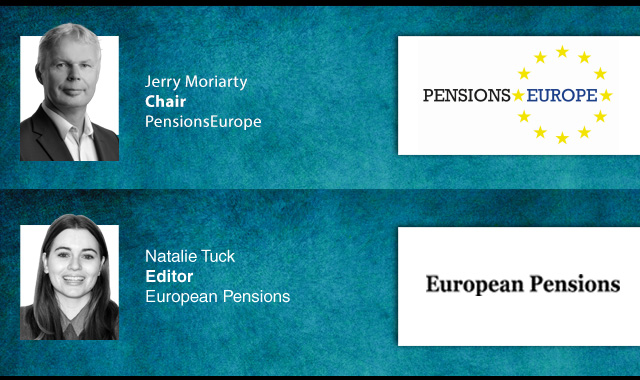
In the latest European Pensions podcast, Natalie Tuck talks to PensionsEurope chair, Jerry Moriarty, about his new role and the European pension policy agenda
Podcast: The benefits of private equity in pension fund portfolios

The outbreak of the Covid-19 pandemic, in which stock markets have seen increased volatility, combined with global low interest rates has led to alternative asset classes rising in popularity. Private equity is one of the top runners in this category, and for good reason.
In this podcast, Munich Private Equity Partners Managing Director, Christopher Bär, chats to European Pensions Editor, Natalie Tuck, about the benefits private equity investments can bring to pension fund portfolios and the best approach to take.
In this podcast, Munich Private Equity Partners Managing Director, Christopher Bär, chats to European Pensions Editor, Natalie Tuck, about the benefits private equity investments can bring to pension fund portfolios and the best approach to take.
Mitigating risk
BNP Paribas Asset Management’s head of pension solutions, Julien Halfon, discusses equity hedging with Laura Blows

© 2019 Perspective Publishing Privacy & Cookies
Recent Stories