In May 2011, pension administration and asset manager APG Group announced it had recorded a total return of 13.3% or €32bn for their Dutch pension fund clients in 2010. This year proved a more challenging year for Dutch pension funds, as funding ratios of several big schemes fell further.
After announcing the 2010 results, APG chief executive Dick Sluimers said the recovery showed that there cannot be enough emphasis placed on a long-term vision for pension funds. “We must be careful not to be led mainly by short-term market developments, since that could turn out to be expensive.”
Pension funds are required to reflect their position in funding ratios based on a daily market interest, which has caused exceptional volatility in 2010. Sluimers said: "Low funding ratios are cause for concern with regards to the tenability of our pension system, while funding ratios that are increasing give the impression that all problems will be resolved by themselves. Both are false conclusions. The Netherlands has a resilient pension system, but the measuring scale should do more justice to the long-term character of assets and liabilities of funds."
This was also still very much applicable to 2011, which saw continued volatility in funding levels and for several pension funds, the coverage ratio has decreased over the year as a whole.
The coverage ratio of Pensioenfonds Zorg en Welzijn, the scheme for the healthcare sector, fell from 111% at the end of the first quarter and 110% at the end of the second quarter to 91% at the end of the third quarter. Despite positive returns during the first three quarters and a rise in assets from €100.4bn to 103.1bn, the fall in interest rates has had a much greater impact on PFZW’s coverage ratio.
The same was true for metal and technology fund Pensioenfonds Metaal en Techniek, which started the year with a coverage ratio of 96% but, despite a high of 102% at the end of June, stood at 87.3% at the end of November. Over the first eleven months of 2011, its assets rose from €37.2bn to €39.3bn, while liabilities rose from €38.8bn to €45.0bn.
Civil service fund ABP, the biggest pension fund in the Netherlands, saw its coverage ratio drop from 105% at the start of the year to 90% at the end of the third quarter. Between the start of the year and the end of September, assets had fallen by €2bn to €237bn and falling interest rates had increased liabilities by €35bn.
Despite a slight increase in the funding level to 94% in October, ABP announced in early December that they will not be giving indexation to the pensions of active members and retirees in the government and education sectors in 2012, although the pension premium will remain unchanged. If the financial position of the fund does not improve, the board will have to decide which further measurements are necessary.
Because of the current financial position of ABP, the pensions cannot be linked to wage growth, which was on average 0.25% in 2011.
However, the pension premium on 1 January 2012 will be 21.9% (including the temporary recovery raise of 1%), of which 70% is paid by the employer and 30% by the employee.
According to ABP’s recovery plan, the pension fund’s coverage ratio should be at least 104.5% at the beginning of 2014. At the beginning of 2012 the trustee board will decide again if the financial position is developing according to plan. If the position has not improved by then, the temporary recovery raise will be increased from 1% to 3% in 2012.
At the same time, the board will decide on any further actions necessary, like increasing the premium even further or cutting benefits of pensioners and the pension agreements of active members. In case the trustee board decides on a reduction of benefits, this will be carried out from April 2013 onwards.



Latest News
-
Pensions sector among least affected by major ICT incidents in 2025 – ESAs
-
OECD urges Estonia to scrap 10-year wait to rejoin second pension pillar
-
Czech pension providers set to challenge govt's proposed fee cuts
-
Pension fees create ‘financial black hole’ for savers – AMF
-
Standard Life rebrands institutional investment platform
-
Two more Dutch pension funds join new pension system




Podcast: Stepping up to the challenge
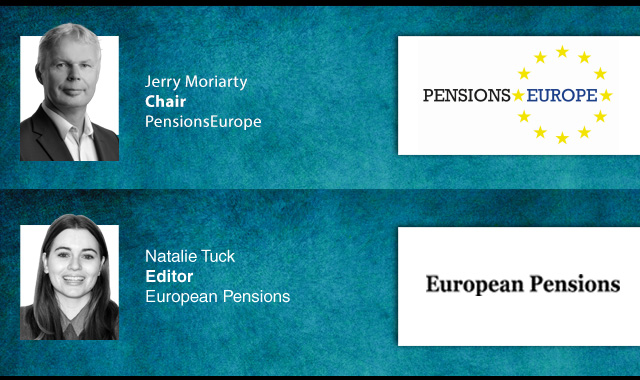
In the latest European Pensions podcast, Natalie Tuck talks to PensionsEurope chair, Jerry Moriarty, about his new role and the European pension policy agenda
Podcast: The benefits of private equity in pension fund portfolios

The outbreak of the Covid-19 pandemic, in which stock markets have seen increased volatility, combined with global low interest rates has led to alternative asset classes rising in popularity. Private equity is one of the top runners in this category, and for good reason.
In this podcast, Munich Private Equity Partners Managing Director, Christopher Bär, chats to European Pensions Editor, Natalie Tuck, about the benefits private equity investments can bring to pension fund portfolios and the best approach to take.
In this podcast, Munich Private Equity Partners Managing Director, Christopher Bär, chats to European Pensions Editor, Natalie Tuck, about the benefits private equity investments can bring to pension fund portfolios and the best approach to take.
Mitigating risk
BNP Paribas Asset Management’s head of pension solutions, Julien Halfon, discusses equity hedging with Laura Blows

© 2019 Perspective Publishing Privacy & Cookies
Recent Stories