On 10 June 2011, the Dutch government and social partners signed a new pension contract, which will see the retirement age rise to 66 by 2020 and to 67 by 2025, while more risk is shifted to the members.
The retirement age will be reviewed every five years and will grow in line with longevity trends, while Minister of Social Affairs Henk Kamp has agreed to increase the state pension by 0.6 per cent above inflation, in line with wages.
If individuals decide to retire early at 65, they get a discount on their state pension of 6.5 per cent, whereas if they decide to keep working after 65, they get a bonus of 6.5 per cent.
With regards to occupational pensions, members will have to bear more risks while pension funds will be able to calculate with expected returns, which caused industry professionals to voice concerns over the robustness and sustainability of the new proposals.
The main criticism of the Netherlands’ biggest union and fierce opponent of the agreement, FNV Bondgenoten, is that it will no longer offer any security about pension income levels, which will move along with the financial markets and all risks will lie with the employees.
In a statement, FNV Bondgenoten said that the employers get the best deal, as their premium will no longer rise and they do not have to top up the pension pot in times of deficits. “This is not just about paying pension premiums, but to take in setbacks together with the employees, as is the case now.”
A few days after the agreement was announced, FNV Bondgenoten presented an alternative to the agreement.
Entitled ‘It can be different, better’, it set out an alternative plan to reform the pension system, aiming to maintain security around the value of the occupational pension to ensure people can have confidence in the level of retirement income they will get when they stop working.
The union said they want all pension funds to have a buffer of 20 per cent to be able to deal with future shocks on the financial markets without having to immediately cut people’s benefits. These buffers are also important for younger generations and need to be built up again after the last crisis.
Worries about the younger generation’s pension were also voiced by several economists, pension experts and even the regulator, as the new agreement states pension funds no longer need a buffer, so in the event financial markets go bad the fund can top up the pensions of current pensioners with reserves that are meant for later generations.
However, the potential for reserves to fail to sufficiently recover has caused concern.
Mark den Hollander, head of investment solutions at Implemented Client Solutions at ING Investment Management, explained that the unions will have a lot of influence on the eventual agreement.
“The younger generation has a smaller voting right in such an organisation, but spreading out financial shocks can be really unattractive for the younger generation. It doesn’t have to be, but the risk is there and in the new agreement that risk is not being rewarded.”
Actuary and owner of Edmond Halley Pension Management Jeroen Tuijp added that this pension agreement would be impossible to explain to members, as there are too many possibilities and variations. “Currently you can compare coverage ratios, which are almost all based on the same principles. In the new agreement pension funds can make up their own plan, depending on what their fund and their members look like, and which investment strategy they have. There will be no way to compare pension funds anymore.”
After reaching the agreement, the unions announced a referendum among their members. In an early vote on 15 August, 96 per cent of the members of FNV Bondgenoten voted against the agreement, with a turnout of 23 per cent, after the union had given negative voting advice to its 470,000 members.
A week later it appeared that not just the unions wanted Kamp to make adjustments to the agreement. A majority of the cabinet also asked the Social Affairs Minister to amend the bill to ensure that, after 2020, lower paid employees can still retire at 65 and that more prudence is added to the agreement so that pension funds do not take too many risks and spend more money than they have.
Kamp had already discussed a plan to give those on a low income ‘extra money’ between 62 and 65, which can help them mitigate the drop in income if they decide to stop working at 65. However, Roos Vermeij, member of the Labour Party, wondered how this would work and said she wanted a detailed plan on how the minister is going to carry out these plans.
After voting against the pensions agreement in September, FNV Bondgenoten and Abvakabo announced they wanted to independently discuss the elaboration of the pension agreement with Kamp, after having denounced their trust in umbrella organisation FNV’s chair Agnes Jongerius.
In a letter to the Ministry of Social Affairs and chair of the employers Bernard Wientjes, the unions have asked to be independently involved in the negotiations that are necessary to turn the agreement into a draft law, so that they can still have some influence.
These further negotiations started in December, after which the agreement will be written into draft bills and voted on by the cabinet.



Latest News
-
Pensions sector among least affected by major ICT incidents in 2025 – ESAs
-
OECD urges Estonia to scrap 10-year wait to rejoin second pension pillar
-
Czech pension providers set to challenge govt's proposed fee cuts
-
Pension fees create ‘financial black hole’ for savers – AMF
-
Standard Life rebrands institutional investment platform
-
Two more Dutch pension funds join new pension system




Podcast: Stepping up to the challenge
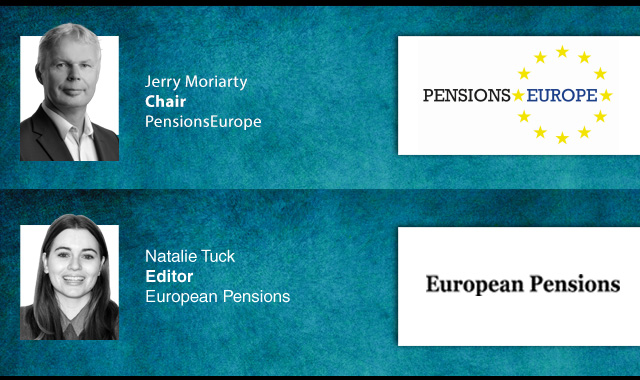
In the latest European Pensions podcast, Natalie Tuck talks to PensionsEurope chair, Jerry Moriarty, about his new role and the European pension policy agenda
Podcast: The benefits of private equity in pension fund portfolios

The outbreak of the Covid-19 pandemic, in which stock markets have seen increased volatility, combined with global low interest rates has led to alternative asset classes rising in popularity. Private equity is one of the top runners in this category, and for good reason.
In this podcast, Munich Private Equity Partners Managing Director, Christopher Bär, chats to European Pensions Editor, Natalie Tuck, about the benefits private equity investments can bring to pension fund portfolios and the best approach to take.
In this podcast, Munich Private Equity Partners Managing Director, Christopher Bär, chats to European Pensions Editor, Natalie Tuck, about the benefits private equity investments can bring to pension fund portfolios and the best approach to take.
Mitigating risk
BNP Paribas Asset Management’s head of pension solutions, Julien Halfon, discusses equity hedging with Laura Blows

© 2019 Perspective Publishing Privacy & Cookies
Recent Stories