The Eurozone summit has seen a new draft package of measures agreed to attempt to resolve the Greek debt crisis.
In a joint statement following the summit, the heads of state, government, and EU institutions in attendance welcomed the measures Greece has undertaken to stabilise public finances.
A new €109 billion bailout proposal was announced, comprised of public sector finances and the IMF, with an estimated €37bn to come from the private sector.
The repayment period was increased to a minimum of 15 years, though this could be extended to 30 years with a grace period of 10 years. Further, the interest rate on the loan was slashed from 5 to 3.5 per cent.
Lending rates and maturities agreed upon for Greece will also be applied for Portugal and Ireland.
In the statement, the Eurozone leaders said member states and the European Commission will “immediately mobilise all resources necessary in order to provide exceptional technical assistance to help Greece implement its reforms.”
The commission is to report on progress in October.
In a statement commenting on the move, Clear Currency said the package was a pre-emptive move to prevent the contagion which has already caught Greece, Ireland and Portugal in its “nasty web of debt.”
“It was encouraging to see the European policy makers step up to the plate, take the bull by the horns and hammer out a firm plan of attack.”
Market reaction has been “risk positive” with the euro “surging ahead” this morning, Clear Currency said.
Meanwhile, manager of BNY Mellon’s Newton Real Return Fund Iain Stewart said that some form of Greek default seems “ultimately inevitable’, and the threat of contagion to other stressed economies remains “very real”.
“The important point is that, although the detail of how, and in which sectors, debts have been allowed to build up may be subtly different in Greece, Portugal, Ireland, Iceland and even, for that matter, the UK and US, all are a result of … monetary distortions - cheap money has led to a mispricing of risk for both borrowers and lenders.
“Clearly, the Greek sovereign bond market, much like the US sub-prime mortgage market and the Icelandic bond market, is an extreme case of this mispricing,” Stewart said.
Under more ‘normal’ circumstances, the debt of a relatively small economy like Greece could be restructured and written down, Stewart said. However, in this case this is not an option due to the “clear risk” of contagion throughout the Eurozone and beyond.
Senior fund manager at Threadneedle’s bond team Dave Chappell said the initiative has been taken positively by the markets.
While some details remain “sketchy”, the actions proposed would lower the borrowing costs and ease the short term financing problems for Greece, Portugal and Ireland, Chappell said.
“The new framework may appease market fears for now, but one must not forget that amongst the fanfare, we are witnessing the first Western developed country default in over half a century. A more robust growth profile than is currently expected is now key for the prospects of calm returning to the financial markets.”



Latest News
-
Cyprus targets January 2027 launch for pension reform
-
Swedish occupational pension assets increase by SEK13bn in Q1
-
UK DB funding surplus rises by £5.3bn in May
-
Pensions sector among least affected by major ICT incidents in 2025 – ESAs
-
OECD urges Estonia to scrap 10-year wait to rejoin second pension pillar
-
Czech pension providers set to challenge govt's proposed fee cuts




Podcast: Stepping up to the challenge
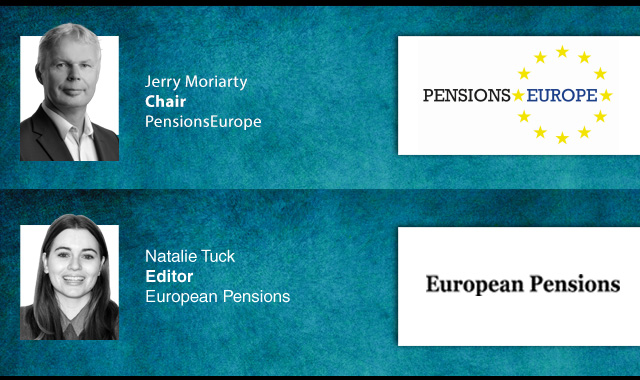
In the latest European Pensions podcast, Natalie Tuck talks to PensionsEurope chair, Jerry Moriarty, about his new role and the European pension policy agenda
Podcast: The benefits of private equity in pension fund portfolios

The outbreak of the Covid-19 pandemic, in which stock markets have seen increased volatility, combined with global low interest rates has led to alternative asset classes rising in popularity. Private equity is one of the top runners in this category, and for good reason.
In this podcast, Munich Private Equity Partners Managing Director, Christopher Bär, chats to European Pensions Editor, Natalie Tuck, about the benefits private equity investments can bring to pension fund portfolios and the best approach to take.
In this podcast, Munich Private Equity Partners Managing Director, Christopher Bär, chats to European Pensions Editor, Natalie Tuck, about the benefits private equity investments can bring to pension fund portfolios and the best approach to take.
Mitigating risk
BNP Paribas Asset Management’s head of pension solutions, Julien Halfon, discusses equity hedging with Laura Blows

© 2019 Perspective Publishing Privacy & Cookies
Recent Stories