The health of the euro remains a greater worry than the problems currently faced by Greece, according to managers surveyed by the Association of Investment Companies.
While the euro is expected to survive, Europe is predicted to become a more dichotomous region, with core economies supporting peripheral ones.
Manager of Montanaro European Smaller Companies Trust, Charles Montanaro, considers Europe as a contrarian investment, “contrarians should buy when others are afraid to do so.”
The yield on Greek debt is implying some sort of default so it could be argued this is already discounted in the market, according to co-manager of European Assets Trust Sam Cosh.
However, Cosh said the bigger issue is whether the euro will survive, as the consequences of a break-up would be more difficult for the market to absorb than a Greek default.
“We believe that the political will is too strong and that it is well understood, particularly within the core countries of France and Germany, that the cost of a euro collapse is far greater than the cost of supporting the currency.
“What this means for investors in the euro area is the two-speed economy will persist: the core countries will continue to benefit from a weak euro while the periphery will struggle under the weight of fiscal consolidation.”
Meanwhile, Montanaro took the view that it is unlikely Greece will be allowed to fail in the next two years. Negotiations would continue to prepare for a “controlled default”, and the euro should survive.
“In the meantime, the growth gap between core and peripheral Europe will widen.”
Although doubts hang over the peripheral economies, BlackRock Greater European Investment Trust argued that opportunities still exist in the European region.
Manager of the trust, Vincent Devlin, said the European region still contains some of the healthiest economies in the developed world, and a high number of world-leading franchises.
“If confidence returns back to the region, we would expect Europe to perform very well as an investment region.”
Manager of the JPMorgan European Investment Trust Stephen Macklow-Smith said the European growth opportunities would be boosted by dividend payments, and Europe looks as if it offers good value relative to other areas.
“The doubts over debts in the periphery are increasing the risk premium demanded by investors, but there are many companies whose sales are more or less unaffected by events in the periphery and benefit from the more competitive exchange rate that is the result of these issues. We are also seeing growth in dividends from most of our investments, and we anticipate further growth as confidence increases.”



Latest News
-
Cyprus targets January 2027 launch for pension reform
-
Swedish occupational pension assets increase by SEK13bn in Q1
-
UK DB funding surplus rises by £5.3bn in May
-
Pensions sector among least affected by major ICT incidents in 2025 – ESAs
-
OECD urges Estonia to scrap 10-year wait to rejoin second pension pillar
-
Czech pension providers set to challenge govt's proposed fee cuts




Podcast: Stepping up to the challenge
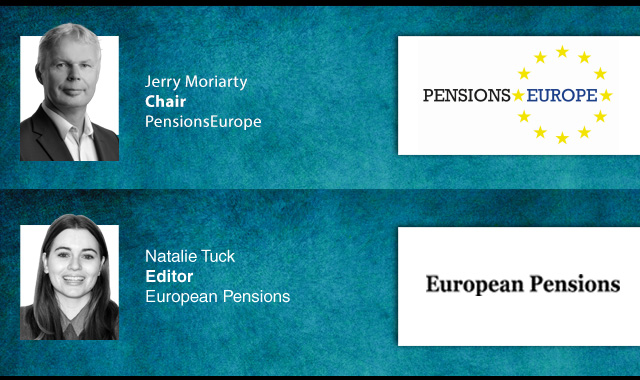
In the latest European Pensions podcast, Natalie Tuck talks to PensionsEurope chair, Jerry Moriarty, about his new role and the European pension policy agenda
Podcast: The benefits of private equity in pension fund portfolios

The outbreak of the Covid-19 pandemic, in which stock markets have seen increased volatility, combined with global low interest rates has led to alternative asset classes rising in popularity. Private equity is one of the top runners in this category, and for good reason.
In this podcast, Munich Private Equity Partners Managing Director, Christopher Bär, chats to European Pensions Editor, Natalie Tuck, about the benefits private equity investments can bring to pension fund portfolios and the best approach to take.
In this podcast, Munich Private Equity Partners Managing Director, Christopher Bär, chats to European Pensions Editor, Natalie Tuck, about the benefits private equity investments can bring to pension fund portfolios and the best approach to take.
Mitigating risk
BNP Paribas Asset Management’s head of pension solutions, Julien Halfon, discusses equity hedging with Laura Blows

© 2019 Perspective Publishing Privacy & Cookies
Recent Stories