A European financial transaction tax (FTT) would disproportionately impact pension funds and Institutions for Occupational Retirement Provision (IORPs), the European Federation for Retirement Provision (EFRP) said in a position paper issued today.
The EFRP said it is openly in favour of a fair contribution from the financial sector to the stability of public finances and to the overall economy in the European Union, but that it believes it would not target the right goal or address major market failures that led to the financial crisis. On the contrary, it fears the rational and undesired effects such a tax would have on pension funds and IORPs, who fulfil a social function and are not speculating investors.
The European Parliament and Council of the European Union are currently discussing a proposal from the European Commission for a directive on a common system of FTT, which would see a common tax being set on all transactions carried out by financial institutions based in the EU.
However, such a tax would make financial transactions more expensive, which would result in lower net returns, which might turn the investment strategy to be less efficient and less liquidity would be circulating on the market, the association said. Higher costs, lower returns and less efficient investment strategies for pension funds, IORPs and companies managing their assets on their behalf would eventually result in lower benefits for pensioners.
The European Commission itself also acknowledged that pension funds and IORPs did not experience the same problems as other financial institutions nor benefited from any public funding during the crisis.
In a statement, the EFRP said: “We stress that the FTT would have unexpected effects: it would multiply the actual tax rate paid by pension funds and IORPs; it would apply to financial transactions which are part of a long-term strategy in the same way as to risky transaction carried out by other financial actors; it would dissuade non-EU investors, when deciding whether to enter into a transaction with an EU-based pension fund, IORP or any financial institution.”
It therefore calls on the European Parliament and the Council of the European Union to dismiss the proposal, or, should the tax be introduced, to exclude pension funds, IORPs and financial institutions managing assets on their behalf from its application.
EFRP chairman Patrick Burke said: “The EFRP understands the reasons underlying the proposal for a Financial Transaction Tax. However, if the proposal was approved in its current form, pension funds, IORPs and companies managing assets on their behalf would be deeply affected by this tax. The consequent increase of costs would be born by beneficiaries, in terms of reduced benefits: current and future pensioners would be requested to pay even more the costs of this financial crisis, which has already affected their income.”



Latest News
-
Cyprus targets January 2027 launch for pension reform
-
Swedish occupational pension assets increase by SEK13bn in Q1
-
UK DB funding surplus rises by £5.3bn in May
-
Pensions sector among least affected by major ICT incidents in 2025 – ESAs
-
OECD urges Estonia to scrap 10-year wait to rejoin second pension pillar
-
Czech pension providers set to challenge govt's proposed fee cuts




Podcast: Stepping up to the challenge
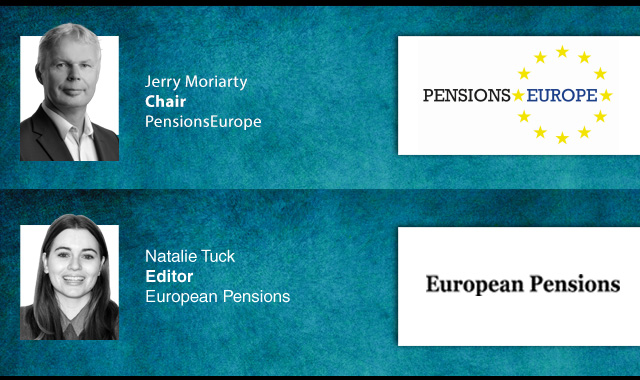
In the latest European Pensions podcast, Natalie Tuck talks to PensionsEurope chair, Jerry Moriarty, about his new role and the European pension policy agenda
Podcast: The benefits of private equity in pension fund portfolios

The outbreak of the Covid-19 pandemic, in which stock markets have seen increased volatility, combined with global low interest rates has led to alternative asset classes rising in popularity. Private equity is one of the top runners in this category, and for good reason.
In this podcast, Munich Private Equity Partners Managing Director, Christopher Bär, chats to European Pensions Editor, Natalie Tuck, about the benefits private equity investments can bring to pension fund portfolios and the best approach to take.
In this podcast, Munich Private Equity Partners Managing Director, Christopher Bär, chats to European Pensions Editor, Natalie Tuck, about the benefits private equity investments can bring to pension fund portfolios and the best approach to take.
Mitigating risk
BNP Paribas Asset Management’s head of pension solutions, Julien Halfon, discusses equity hedging with Laura Blows

© 2019 Perspective Publishing Privacy & Cookies
Recent Stories