All Dutch pension funds and insurance companies should be legally obliged to offer a ‘security pension’ as one of their product offerings, to give every employee the possibility of a secure pension, insurance company Aegon stated in a position paper to the government.
Under the new pension agreement, employees will bear more risks and their retirement income will become less certain, with the possibility of pension cuts in bad times. However, employees do not want to take more risk and earlier research by Aegon showed that two thirds of employees are even prepared to pay in more contributions in order to have more financial security in retirement.
Aegon’s proposed legal security pension would offer such security. The insurer calculated that a security of 99.5 per cent would cost one per cent of annual indexation. Under current circumstances the ambition of pension funds is an indexation of 2.6 per cent, which would be lowered to 1.6 per cent for the security pension. However, this would mean the employee’s pension will not be cut, while the pension contributions remain at the same level.
The firm has written to the Minister of Social Affairs Henk Kamp with their plan to oblige pension providers to offer a security pension, which it defines as “a pension of which the member is for 99.5 per cent sure that at his retirement date he gets a lifelong income the size of the agreed claim”.
At the moment pension funds have to offer a security of 97.5 per cent, which means a provider cannot meet its liabilities once every forty years. With a security of 99.5 per cent this would be once every 200 years.
The proposal states that employees are not obliged to choose such a pension, as the long time horizon of pension funds calls for investment risk, especially for young members. The employee can then transfer to a security pension in their own time.



Latest News
-
Pensions sector among least affected by major ICT incidents in 2025 – ESAs
-
OECD urges Estonia to scrap 10-year wait to rejoin second pension pillar
-
Czech pension providers set to challenge govt's proposed fee cuts
-
Pension fees create ‘financial black hole’ for savers – AMF
-
Standard Life rebrands institutional investment platform
-
Two more Dutch pension funds join new pension system




Podcast: Stepping up to the challenge
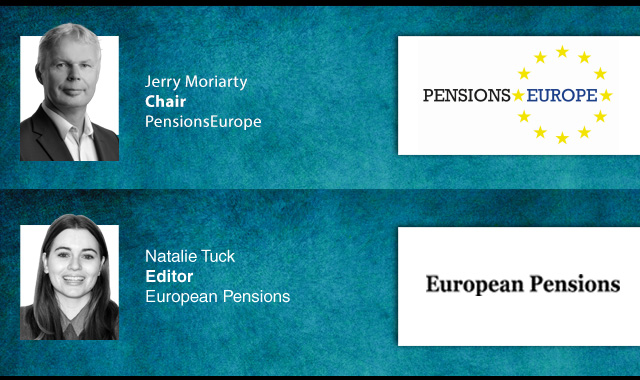
In the latest European Pensions podcast, Natalie Tuck talks to PensionsEurope chair, Jerry Moriarty, about his new role and the European pension policy agenda
Podcast: The benefits of private equity in pension fund portfolios
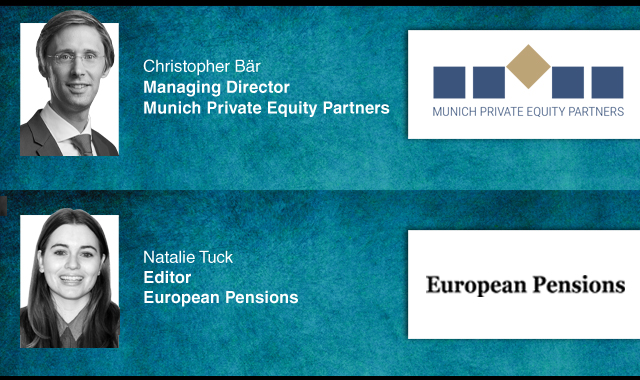
The outbreak of the Covid-19 pandemic, in which stock markets have seen increased volatility, combined with global low interest rates has led to alternative asset classes rising in popularity. Private equity is one of the top runners in this category, and for good reason.
In this podcast, Munich Private Equity Partners Managing Director, Christopher Bär, chats to European Pensions Editor, Natalie Tuck, about the benefits private equity investments can bring to pension fund portfolios and the best approach to take.
In this podcast, Munich Private Equity Partners Managing Director, Christopher Bär, chats to European Pensions Editor, Natalie Tuck, about the benefits private equity investments can bring to pension fund portfolios and the best approach to take.
Mitigating risk
BNP Paribas Asset Management’s head of pension solutions, Julien Halfon, discusses equity hedging with Laura Blows

© 2019 Perspective Publishing Privacy & Cookies
Recent Stories