Mail and logistics group Deutsche Post has confirmed it will appeal a European Commission ruling which would require it to return € 500m to € 1bn in state aid.
In a statement, the commission said an investigation into measures taken by Germany in favour of Deutsche Post showed the company received public transfers of around €5.6bn from 1990 to 1995 as compensation for the costs of its public service obligations. Since 1995, the firm received pension subsidies of around €37bn.
The commission concluded the transfers between 1990 and 1995 did not provide an undue advantage to Deutsche Post, as that aid only covered the costs of the business’ public service obligations.
However, the commission considered the subsequent payments, including benefits from increased stamp prices, did grant an economic advantage. The ruling states that Deutsche Post bore a “significantly lower” burden in respect of social contributions than its competitors.
As a result, the commission has ordered the recovery of the “incompatible” aid in the range of € 500m to €1bn for the period from 2003 onwards.
Responding to the decision, Deutsche Post said it did not believe the ruling would withstand legal review, and it would appeal to the European Court of Justice.
Chief executive Frank Appel said the decision was “incomprehensible”, and had “no basis in fact”.
“It stands in clear contradiction to an earlier EU decision and the outcomes of similar proceedings. If you examine the state aid rulings on other European postal service providers, it becomes quite clear that here the commission has applied double standards. We are absolutely confident that the decision will have no validity in court and are proceeding on the assumption that the amount plus interest will be repaid,” Appel said.
The company moved to reassure investors that, as it did not believe the ruling would stand, earnings for the past fiscal year and in the years to come would be unaffected. Also, the yet to be proposed dividend for fiscal year 2011 remained unaffected.
However, the company said group liquidity would be temporarily impacted by the payment, but would “continue to remain solid”.



Latest News
-
Pensions sector among least affected by major ICT incidents in 2025 – ESAs
-
OECD urges Estonia to scrap 10-year wait to rejoin second pension pillar
-
Czech pension providers set to challenge govt's proposed fee cuts
-
Pension fees create ‘financial black hole’ for savers – AMF
-
Standard Life rebrands institutional investment platform
-
Two more Dutch pension funds join new pension system




Podcast: Stepping up to the challenge
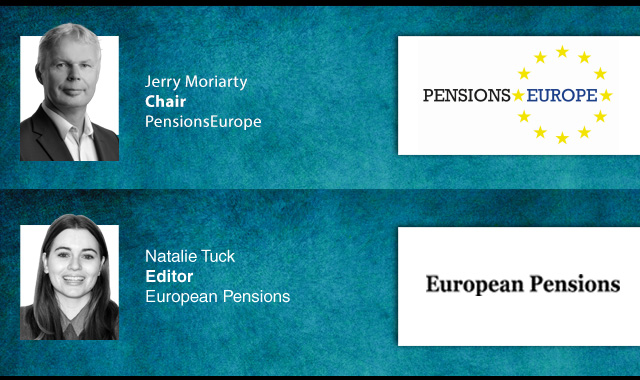
In the latest European Pensions podcast, Natalie Tuck talks to PensionsEurope chair, Jerry Moriarty, about his new role and the European pension policy agenda
Podcast: The benefits of private equity in pension fund portfolios

The outbreak of the Covid-19 pandemic, in which stock markets have seen increased volatility, combined with global low interest rates has led to alternative asset classes rising in popularity. Private equity is one of the top runners in this category, and for good reason.
In this podcast, Munich Private Equity Partners Managing Director, Christopher Bär, chats to European Pensions Editor, Natalie Tuck, about the benefits private equity investments can bring to pension fund portfolios and the best approach to take.
In this podcast, Munich Private Equity Partners Managing Director, Christopher Bär, chats to European Pensions Editor, Natalie Tuck, about the benefits private equity investments can bring to pension fund portfolios and the best approach to take.
Mitigating risk
BNP Paribas Asset Management’s head of pension solutions, Julien Halfon, discusses equity hedging with Laura Blows

© 2019 Perspective Publishing Privacy & Cookies
Recent Stories