A hedge fund trade association has expressed concern that the draft regulation to implement the Alternative Investment Fund Managers Directive (AIFMD) departs “significantly and substantially” from the European Securities and Markets Authority (ESMA) advice in a number of key areas.
The European Commission has proposed the new text in response to advice from ESMA, and is seeking to implement AIFMD via a regulation, which enters effect more quickly than a directive.
EU member states and the European Parliament have two weeks to respond to the new text.
Alternative Investment Management Association (AIMA) chief executive Andrew Baker has said third country provisions, depositaries, delegation, leverage, own funds, professional indemnity insurance, appointment of prime brokers and calculation of assets under management are all areas in which the regulation diverges from the advice.
“We fully respect the commission’s right not to follow ESMA advice when producing secondary legislation. However, there should be more transparency and better consultation if the commission has decided to depart from the advice in such crucial areas for the global asset management industry.”
The global association was particularly concerned about the third country provisions, which relate to non-EU jurisdictions, and how managers operating in those jurisdictions access EU investors.
Baker said the commission is considering a requirement for EU and non-EU regulators to sign cooperation agreements legally binding to both parties. He said this would be “extremely problematic if not impossible” to achieve if the agreements are required to ensure international regulators enforce EU law in their home countries.
“It could be extremely difficult for many regulators to be able to sign up to that. We urge the commission to clarify this issue in their final text.
“Without cooperation agreements, asset managers outside the EU will not be able to access investors in the EU except through reverse solicitation. This would close the door to national private placement regimes in the EU, which would have a major impact on asset managers globally. It would also prevent delegation of portfolio management outside of the EU, which would be of great concern for global asset managers,” Baker said.



Latest News
-
Cyprus targets January 2027 launch for pension reform
-
Swedish occupational pension assets increase by SEK13bn in Q1
-
UK DB funding surplus rises by £5.3bn in May
-
Pensions sector among least affected by major ICT incidents in 2025 – ESAs
-
OECD urges Estonia to scrap 10-year wait to rejoin second pension pillar
-
Czech pension providers set to challenge govt's proposed fee cuts




Podcast: Stepping up to the challenge
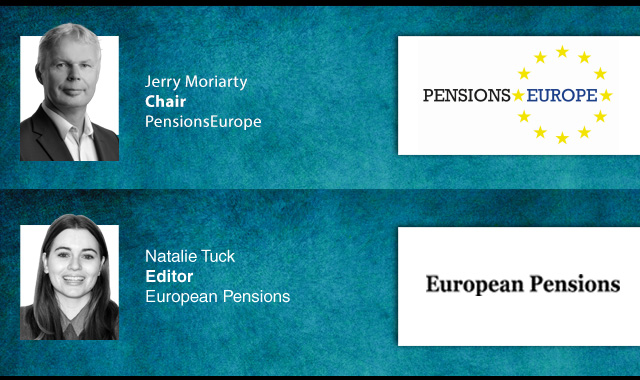
In the latest European Pensions podcast, Natalie Tuck talks to PensionsEurope chair, Jerry Moriarty, about his new role and the European pension policy agenda
Podcast: The benefits of private equity in pension fund portfolios

The outbreak of the Covid-19 pandemic, in which stock markets have seen increased volatility, combined with global low interest rates has led to alternative asset classes rising in popularity. Private equity is one of the top runners in this category, and for good reason.
In this podcast, Munich Private Equity Partners Managing Director, Christopher Bär, chats to European Pensions Editor, Natalie Tuck, about the benefits private equity investments can bring to pension fund portfolios and the best approach to take.
In this podcast, Munich Private Equity Partners Managing Director, Christopher Bär, chats to European Pensions Editor, Natalie Tuck, about the benefits private equity investments can bring to pension fund portfolios and the best approach to take.
Mitigating risk
BNP Paribas Asset Management’s head of pension solutions, Julien Halfon, discusses equity hedging with Laura Blows

© 2019 Perspective Publishing Privacy & Cookies
Recent Stories