The deficits of defined benefit (DB) pension schemes sponsored by Ireland's largest private sector companies and most significant state-owned bodies rose by an estimated €9 billion since January 2010 to approximately €16 billion at 30 September 2010, a report by LCP has revealed.
LCP Ireland Pensions Accounting Briefing 2010 analysed the performance of the DB pension schemes of the top 25 companies listed on the Irish Stock Exchange and 12 state-owned bodies, as reported in their annual accounts for 2009.
Combined deficits for the 12 state-owned companies stand at an estimated €7.3bn as at 30 September 2010. Together these pension schemes hold only 54% of the assets required to meet the pension benefits already earned by members.
The highest funding level disclosed was that of Anglo Irish Bank with a funding level of 108% of assets over liabilities. Significantly, Anglo Irish Bank has the lowest proportion of equity holdings (34%). The largest deficit was reported by ESB as €2.2 billion followed by Bank of Ireland with a deficit of €1.6 billion. ESB also reported the largest deficit in 2008.
Some companies have taken action since 2009 to attempt to improve their pension deficits. Such actions include closing DB schemes to new entrants, reviewing benefits for existing pension scheme members, increasing employee contributions, and making significant special contributions.
“Although a small number of companies have taken specific actions to try to control their pension deficits, there is little evidence that investment practices are adapting to the new economic climate when it comes to reducing risk within their pension schemes,” said Conor Daly, partner at LCP Ireland.
“Irish pension schemes continue to have one of the highest levels of equity investment, by proportion, of any country in the world. There is a danger that in many cases, schemes are placing an over-reliance on the markets to 'grow' their way out of trouble. Employers need to control the cost of the benefits they are promising to members and manage their level of risk. If not, the individual members will be the ones to suffer when pension schemes don't have the funds to pay out benefits during retirement.”



Latest News
-
Cyprus targets January 2027 launch for pension reform
-
Swedish occupational pension assets increase by SEK13bn in Q1
-
UK DB funding surplus rises by £5.3bn in May
-
Pensions sector among least affected by major ICT incidents in 2025 – ESAs
-
OECD urges Estonia to scrap 10-year wait to rejoin second pension pillar
-
Czech pension providers set to challenge govt's proposed fee cuts




Podcast: Stepping up to the challenge
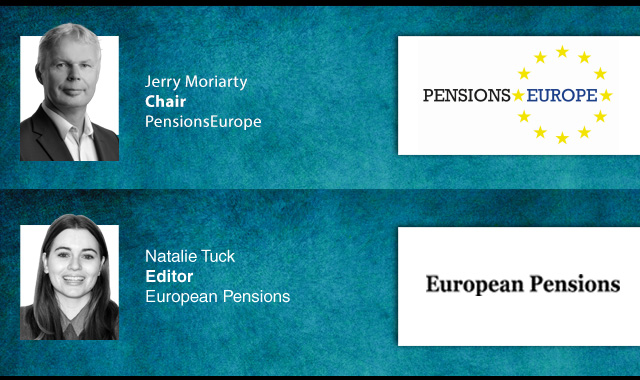
In the latest European Pensions podcast, Natalie Tuck talks to PensionsEurope chair, Jerry Moriarty, about his new role and the European pension policy agenda
Podcast: The benefits of private equity in pension fund portfolios

The outbreak of the Covid-19 pandemic, in which stock markets have seen increased volatility, combined with global low interest rates has led to alternative asset classes rising in popularity. Private equity is one of the top runners in this category, and for good reason.
In this podcast, Munich Private Equity Partners Managing Director, Christopher Bär, chats to European Pensions Editor, Natalie Tuck, about the benefits private equity investments can bring to pension fund portfolios and the best approach to take.
In this podcast, Munich Private Equity Partners Managing Director, Christopher Bär, chats to European Pensions Editor, Natalie Tuck, about the benefits private equity investments can bring to pension fund portfolios and the best approach to take.
Mitigating risk
BNP Paribas Asset Management’s head of pension solutions, Julien Halfon, discusses equity hedging with Laura Blows

© 2019 Perspective Publishing Privacy & Cookies
Recent Stories