The viability of a harmonised system of pension funding rules across the European Union will depend on the outcomes of a quantitative impact assessment, which is essential for any legislative proposal, the European Insurance and Occupational Pensions Authority (EIOPA) has warned.
In a 517 page consultation document published yesterday on its draft response to the European Commission’s request to advise them on the future of the Institutions for Occupational Retirement Provision (IORP) directive and on the legislative framework concerning IORPs, the EIOPA underlined how funding arrangements should be harmonised for workplace-based pensions.
Advice has also been sought on what quantitative requirements should apply to IORPs and how these should be measured, secondly what should be the qualitative requirements in respect to the governance of IORPs and also what information should be provided to members, beneficiaries and supervisory authorities. The review of the IORP directive was conducted in order to propose measures to simplify the setting-up of cross-border pension schemes.
Towers Watson senior consultant Mark Dowsey said: “The central theme running through EIOPA’s advice is a so-called ‘holistic balance sheet’ for pension schemes. Liabilities would be calculated on a conservative basis –though precisely how conservative is still being debated – and would then have to be balanced by a mixture of assets, contingent assets, sponsor support and possible access to compensation schemes.”
However, head of research at Punter Southall Jane Beverley said that industry figures should be “wary” about welcoming EIOPA’s draft advice too warmly with regards to the adoption of a ‘holistic balance sheet.’
“The sponsor covenant would have to be explicitly valued in order to be taken into account as a notional asset in the balance sheet calculation, something that EIOPA itself notes would be a ‘potentially complex and costly exercise for IORPs to undertake.”



Latest News
-
Cyprus targets January 2027 launch for pension reform
-
Swedish occupational pension assets increase by SEK13bn in Q1
-
UK DB funding surplus rises by £5.3bn in May
-
Pensions sector among least affected by major ICT incidents in 2025 – ESAs
-
OECD urges Estonia to scrap 10-year wait to rejoin second pension pillar
-
Czech pension providers set to challenge govt's proposed fee cuts




Podcast: Stepping up to the challenge
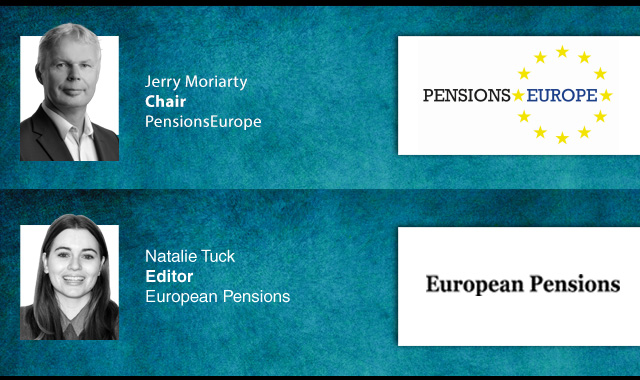
In the latest European Pensions podcast, Natalie Tuck talks to PensionsEurope chair, Jerry Moriarty, about his new role and the European pension policy agenda
Podcast: The benefits of private equity in pension fund portfolios

The outbreak of the Covid-19 pandemic, in which stock markets have seen increased volatility, combined with global low interest rates has led to alternative asset classes rising in popularity. Private equity is one of the top runners in this category, and for good reason.
In this podcast, Munich Private Equity Partners Managing Director, Christopher Bär, chats to European Pensions Editor, Natalie Tuck, about the benefits private equity investments can bring to pension fund portfolios and the best approach to take.
In this podcast, Munich Private Equity Partners Managing Director, Christopher Bär, chats to European Pensions Editor, Natalie Tuck, about the benefits private equity investments can bring to pension fund portfolios and the best approach to take.
Mitigating risk
BNP Paribas Asset Management’s head of pension solutions, Julien Halfon, discusses equity hedging with Laura Blows

© 2019 Perspective Publishing Privacy & Cookies
Recent Stories