The European appetite for exchange traded products (ETP) will push market growth for this region up by 20-25 per cent in 2010, predicts Deutsche Bank.
According to its latest research, Deutsche Bank expects to see assets in Europe move towards to €200bn mark, although if bullish equity markets continue this could easily hit €210bn. European growth rates are also expected to surpass those in the US, although the US will remain significantly larger when it comes to absolute size and growth.
Alternative ETPs, such as those that target hedge fund returns, will continue to see strong growth in Europe, and Deutsche Bank expects synthetic replication to become the prevalent replication technique across asset classes in Europe; in 2009, providers that used synthetic replication experienced strong inflows.
In 2009, European ETP assets recorded strong growth of €50.1bn, and fixed income assets saw a 17 per cent growth. Commodity assets almost tripled in Europe to €21.1bn, and those targeting hedge fund-like returns grew to €684million.
BlackRock and Lyxor lost market share of 1.8 per cent and 6.4 per cent respectively, and db x-trackers, ETF Securities and Credit Suisse grew in market share by €26.3bn, €10.9bn and €6.8bn respectively.
State Street Corporation meanwhile has released its latest Vision Focus report, looking at trends in the usage of exchange traded funds (ETFs) by institutional investors.
The report shows that, despite ETFs currently accounting for almost USD $1trn in assets under management, institutional investors do not always take full advantage of these investment vehicles.
Anthony Rochte, senior managing director at State Street Global Advisors, commented: "In this time of economic uncertainty, market volatility and increased scrutiny over investment management fees, ETFs are gaining traction by enabling investors to express a tactical view on an industry, commodity or asset class while providing well-diversified, low-cost market exposure. Institutions are increasingly discovering the benefits of ETFs. However, to fully maximise their potential, continuing dialogue with institutions and providing educations resources describing the widening array of uses for these offerings is essential."
The report looks at current methods of using ETFs for optimal effect, such as cash equitisation, completion and core-satellite strategies, strategic asset allocation and tax management. Differences in the development of the ETF market by region is also highlighted.



Latest News
-
Pensions sector among least affected by major ICT incidents in 2025 – ESAs
-
OECD urges Estonia to scrap 10-year wait to rejoin second pension pillar
-
Czech pension providers set to challenge govt's proposed fee cuts
-
Pension fees create ‘financial black hole’ for savers – AMF
-
Standard Life rebrands institutional investment platform
-
Two more Dutch pension funds join new pension system




Podcast: Stepping up to the challenge
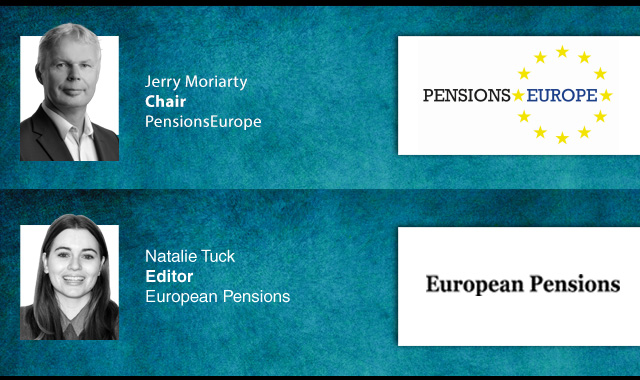
In the latest European Pensions podcast, Natalie Tuck talks to PensionsEurope chair, Jerry Moriarty, about his new role and the European pension policy agenda
Podcast: The benefits of private equity in pension fund portfolios

The outbreak of the Covid-19 pandemic, in which stock markets have seen increased volatility, combined with global low interest rates has led to alternative asset classes rising in popularity. Private equity is one of the top runners in this category, and for good reason.
In this podcast, Munich Private Equity Partners Managing Director, Christopher Bär, chats to European Pensions Editor, Natalie Tuck, about the benefits private equity investments can bring to pension fund portfolios and the best approach to take.
In this podcast, Munich Private Equity Partners Managing Director, Christopher Bär, chats to European Pensions Editor, Natalie Tuck, about the benefits private equity investments can bring to pension fund portfolios and the best approach to take.
Mitigating risk
BNP Paribas Asset Management’s head of pension solutions, Julien Halfon, discusses equity hedging with Laura Blows

© 2019 Perspective Publishing Privacy & Cookies
Recent Stories