The European Sustainable and Responsible Investment market has expanded to approximately €5 trillion assets under management, despite the financial crisis, Eurosif’s 2010 European SRI Study revealed.
The ongoing financial crisis combined with disasters such as the oil spill in the Gulf of Mexico have convinced many investors to integrate Environmental, Social and Governance (ESG) issues into investment decisions.
The study highlights the scale of the European SRI Market as well as European and national trends across nineteen countries, including for the first time the Baltic States, Poland, Greece and Cyprus.
Based on the self-reporting of asset managers and self-managed asset owners, the study reveals that the total SRI AuM have increased from €2.7 trillion to €5 trillion as of 31 December 2009. This represents a spectacular growth of about 87 per cent since the data was previously collected two years before.
To simplify the complex issue of SRI, Eurosif uses the terms Core SRI and Broad SRI. Core SRI is estimated at €1.2 trillion and consists of norms and values based exclusions and different types of positive screens. Broad SRI encompasses simple exclusion, engagement and integration approaches, and is currently estimated at €3.8 trillion.
Bonds are now the favoured asset class of SRI investors, representing 53 per cent of all SRI assets, while equities have dropped down to 33 per cent. Microfinance funds are also beginning to generate interest and are likely to grow quickly as investors demand integration of ESG criteria into more diverse areas.
Jean-Claude Bassien, chairman and CEO at Crédit Agricole Cheuvreux, commented: “As this survey demonstrates, despite the crisis, decision makers are taking extra-financial criteria into account at an impressive pace. We hope this will convince all companies to further improve both their disclosure and their performance on ESG related issues in order to meet the ever-increasing investor expectations.”



Latest News
-
Cyprus targets January 2027 launch for pension reform
-
Swedish occupational pension assets increase by SEK13bn in Q1
-
UK DB funding surplus rises by £5.3bn in May
-
Pensions sector among least affected by major ICT incidents in 2025 – ESAs
-
OECD urges Estonia to scrap 10-year wait to rejoin second pension pillar
-
Czech pension providers set to challenge govt's proposed fee cuts




Podcast: Stepping up to the challenge
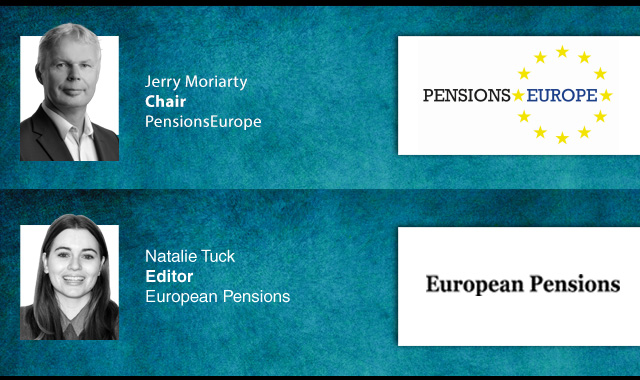
In the latest European Pensions podcast, Natalie Tuck talks to PensionsEurope chair, Jerry Moriarty, about his new role and the European pension policy agenda
Podcast: The benefits of private equity in pension fund portfolios

The outbreak of the Covid-19 pandemic, in which stock markets have seen increased volatility, combined with global low interest rates has led to alternative asset classes rising in popularity. Private equity is one of the top runners in this category, and for good reason.
In this podcast, Munich Private Equity Partners Managing Director, Christopher Bär, chats to European Pensions Editor, Natalie Tuck, about the benefits private equity investments can bring to pension fund portfolios and the best approach to take.
In this podcast, Munich Private Equity Partners Managing Director, Christopher Bär, chats to European Pensions Editor, Natalie Tuck, about the benefits private equity investments can bring to pension fund portfolios and the best approach to take.
Mitigating risk
BNP Paribas Asset Management’s head of pension solutions, Julien Halfon, discusses equity hedging with Laura Blows

© 2019 Perspective Publishing Privacy & Cookies
Recent Stories