The European Union (EU) has admitted that pensions are not 'immune' from the financial crisis, but have shown themselves to be 'robust' in comparison to other financial institutions.
The memo examines different pension schemes throughout the EU, and concludes that the long-term nature of pensions works to their advantage, giving some natural protection. However, they said that the precise impact the crisis will have depends on the specific mix of schemes in place in a Member State.
The pay-as-you-go (PAYG) schemes would be affected should there be a serious economic downturn, or larger national debt, forcing policy adjustments in order to secure the long-term sustainability of such schemes in some countries. However, short-term, the EU said people will get their expected pensions, and should any adjustments be necessary in the longer-term, these will be phased in gradually.
Defined benefit (DB) occupational schemes, however, take on the investment risks, therefore increasing the risk of direct impact on investments. There will, the EU said, be challenges going forward as DB schemes in deficit as a result of falls in investment seek to restore their funding balance. It is also feared that the crisis may also accelerate the long-term trend for DB schemes to close to new members, or even to future accruals, to control costs.
There could, however, be more serious impacts, although the Insolvency Directive and measures Member States have already put in place provide a layer of protection.
Those with defined contribution (DC) pension schemes, and are close to retirement, may still be protected from the downturn should they have 'lifestyle' strategies, moving into less volatile investments like cash and bonds as retirement approaches. However, those who are not will face less well paid or later retirements. However, the EU said this is an atypical scenario for most European citizens. Those some years from retirement may also be safe as the markets will have time to recover.
The EU concluded that the crisis has highlighted that there is no perfect pensions system, and there is room for improvement in the EU's current pensions framework.



Latest News
-
Pensions sector among least affected by major ICT incidents in 2025 – ESAs
-
OECD urges Estonia to scrap 10-year wait to rejoin second pension pillar
-
Czech pension providers set to challenge govt's proposed fee cuts
-
Pension fees create ‘financial black hole’ for savers – AMF
-
Standard Life rebrands institutional investment platform
-
Two more Dutch pension funds join new pension system




Podcast: Stepping up to the challenge
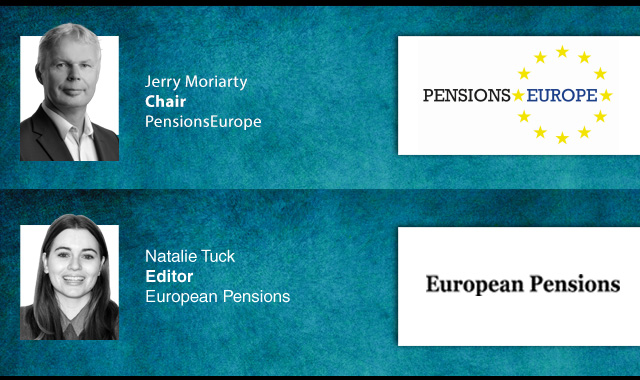
In the latest European Pensions podcast, Natalie Tuck talks to PensionsEurope chair, Jerry Moriarty, about his new role and the European pension policy agenda
Podcast: The benefits of private equity in pension fund portfolios

The outbreak of the Covid-19 pandemic, in which stock markets have seen increased volatility, combined with global low interest rates has led to alternative asset classes rising in popularity. Private equity is one of the top runners in this category, and for good reason.
In this podcast, Munich Private Equity Partners Managing Director, Christopher Bär, chats to European Pensions Editor, Natalie Tuck, about the benefits private equity investments can bring to pension fund portfolios and the best approach to take.
In this podcast, Munich Private Equity Partners Managing Director, Christopher Bär, chats to European Pensions Editor, Natalie Tuck, about the benefits private equity investments can bring to pension fund portfolios and the best approach to take.
Mitigating risk
BNP Paribas Asset Management’s head of pension solutions, Julien Halfon, discusses equity hedging with Laura Blows

© 2019 Perspective Publishing Privacy & Cookies
Recent Stories