The European Commission's Working Paper, Consultation on the Future "EU 2020" Strategy has been largely welcomed by the European Federation for Retirement Provision (EFRP), although the representative of national associations of pension funds and similar institutions has made recommendations for improvements.
While the EFRP fully supports the key objective proposed by the Commission, to ensure a successful exit from the crisis and enter into a new sustainable and greener social market economy, areas such as longevity must be paid more attention. One suggestion is for the Commission to work closely with the Member States of the EU to enhance supplementary funded pension coverage, so EU citizens can maintain their standard of living upon retirement.
A policy paper produced by the EFRP details the organisation's views on how the Commission should carry out the Political Guidelines established by European Commission President Barroso to tackle the challenge that an ageing population presents.
"The EU now needs to make a stronger effort to work together to make a successful exit from the crisis and to shape the next generation of public policies in a very different set of circumstances," said the paper. "The risk is a period of low growth which can only make it harder for Europe to tackle the major challenges we face today."
The paper highlights the 2009 Ageing Report and the 2009 Sustainability Report as starting points for this, as they have already outlined the financial and budgetary challenges that ageing societies pose.
The lack of a common pension model at EU-level is noted in the paper, and the EFRP says the EU 2020 vision could provide an opportunity to look at how Europe's different pillar models could be put together to establish a common EU-level structure.
The EFRP also said that it is in favour of transferability of pension capital, and the Commission proposal to improve the portability of workplace pensions, which was issued in 2005, targeted the portability of supplementary occupational pension rights rather than regulate the transfer of accrued pension capital. The Commission, in doing so, interfered with Member States' social and labour law, the EFRP said.
Finally, the EFRP said that it hopes to see the European Commission and European Council dismiss the short-sighted decisions in the Central and Eastern Europe (CEE) scaling back the pensions reforms which saw part of pillar one contributions (the State PAYG pension) rerouted to a second funded pillar. Instead, European policymakers should work towards providing the right incentives for short-term debt control as well as long-term debt structure in all EU Member States.



Latest News
-
Pensions sector among least affected by major ICT incidents in 2025 – ESAs
-
OECD urges Estonia to scrap 10-year wait to rejoin second pension pillar
-
Czech pension providers set to challenge govt's proposed fee cuts
-
Pension fees create ‘financial black hole’ for savers – AMF
-
Standard Life rebrands institutional investment platform
-
Two more Dutch pension funds join new pension system




Podcast: Stepping up to the challenge
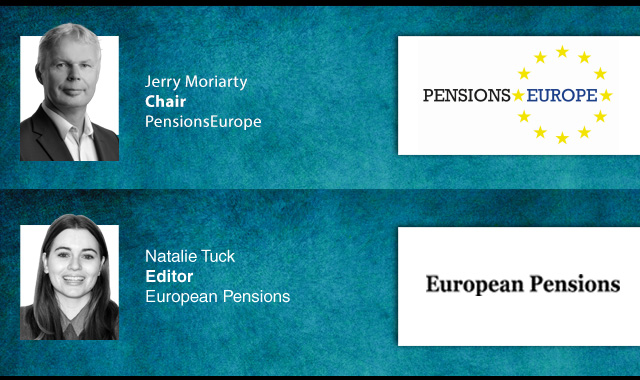
In the latest European Pensions podcast, Natalie Tuck talks to PensionsEurope chair, Jerry Moriarty, about his new role and the European pension policy agenda
Podcast: The benefits of private equity in pension fund portfolios

The outbreak of the Covid-19 pandemic, in which stock markets have seen increased volatility, combined with global low interest rates has led to alternative asset classes rising in popularity. Private equity is one of the top runners in this category, and for good reason.
In this podcast, Munich Private Equity Partners Managing Director, Christopher Bär, chats to European Pensions Editor, Natalie Tuck, about the benefits private equity investments can bring to pension fund portfolios and the best approach to take.
In this podcast, Munich Private Equity Partners Managing Director, Christopher Bär, chats to European Pensions Editor, Natalie Tuck, about the benefits private equity investments can bring to pension fund portfolios and the best approach to take.
Mitigating risk
BNP Paribas Asset Management’s head of pension solutions, Julien Halfon, discusses equity hedging with Laura Blows

© 2019 Perspective Publishing Privacy & Cookies
Recent Stories